OTTAWA—Rick Smith, President of the Canadian Climate Institute, made the following statement in response to the Ontario government’s claims that industrial carbon pricing and federal emissions standards for passenger vehicles are costing the auto sector billions of dollars:
“The Ontario government needs to get their facts straight about industrial carbon pricing, the federal emission standards for passenger vehicles, and Ontario’s auto sector.
“In recent days, different government representatives have made a variety of claims of significant financial cost from these policies—none of which have any basis in fact.
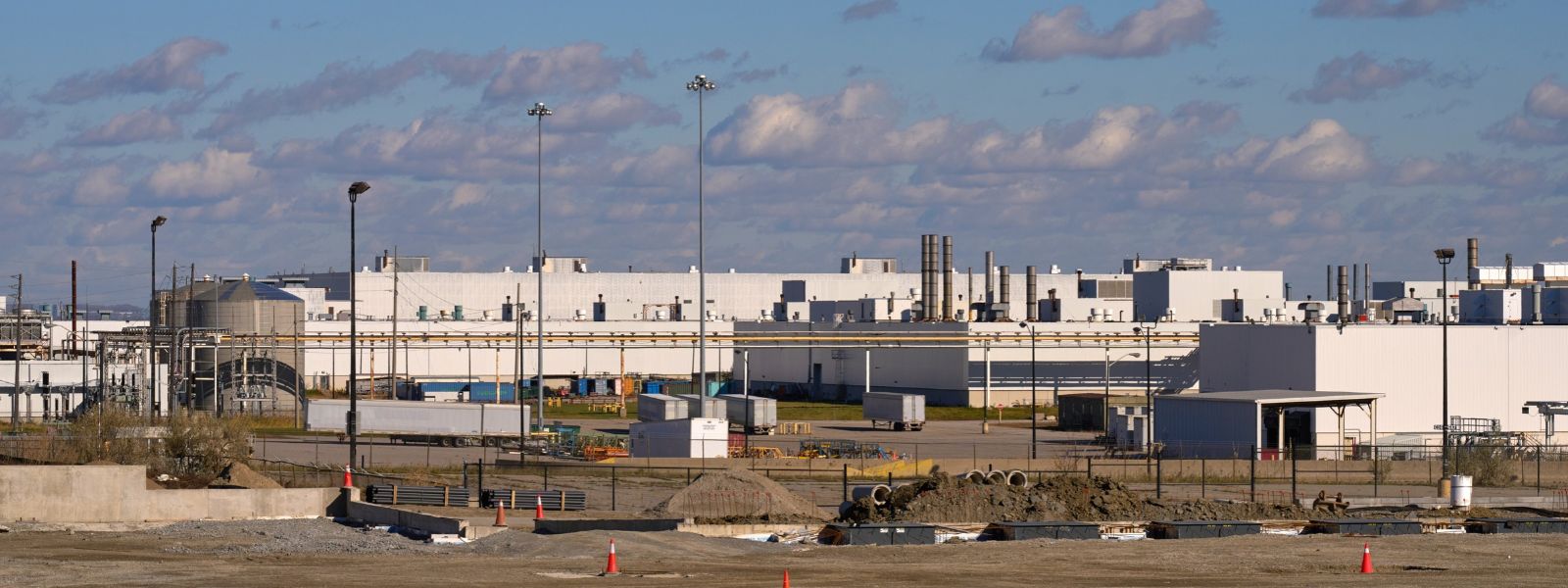
“The notion that Stellantis is paying upwards of $300 million in environmental fees is contrary to all available evidence. It is especially egregious to blame climate policies for costs associated with the company’s idled Brampton assembly. The plant has not produced any vehicles for three years, and it would incur exactly zero costs from industrial carbon pricing or emissions regulations.
“The Ontario government’s numbers are 100 times too high for carbon pricing—even for the auto sector as a whole. Our analysis finds that the cost of industrial carbon pricing for Ontario’s entire auto sector was around $3 million in 2023 and $3.2 million in 2024—essentially a rounding error for an industry worth many billions of dollars.
“The government’s claims about federal regulations on vehicle emissions are equally inaccurate. There is no evidence that these regulations—which only apply to vehicles sold in Canada—would cost Stellantis anywhere near the amounts being cited. These regulations require automakers to earn credits for selling more fuel-efficient vehicles, and there is a glut of these credits on the market. It is also worth remembering that the federal government has already weakened these regulations, freezing them at current levels, in response to requests from the industry.
“The point of climate policies is to reduce emissions and help retool our industries for the future—and they are efficient at doing so. There is already evidence of this in Ontario. Just this month, Algoma Steel started up its second electric arc furnace, part of an investment that will cut its emissions by 70 per cent—thanks to support from the provincial and federal governments, and the incentive created by carbon pricing.
“While it’s reasonable to seek solutions for a sector that has faced substantial economic headwinds from erratic U.S. tariffs, scrapping cost-effective climate policies is not the answer. The Ontario government should rethink its opposition and instead support a cleaner, more competitive provincial economy that helps accelerate the auto sector’s transition to affordable, made-in-Canada electric vehicles.”
RESOURCES
- Fact sheet | How industrial carbon pricing reduces emissions at minimal cost
- Media statement | Delay of tailpipe standards is a step backwards for affordable electric vehicles
- Insight | Electric vehicle adoption will be critical for Canada to meet its new automotive strategy goals
- Insight | What is driving electric vehicle sales in Canada?
MEDIA CONTACTS
Jaela Bernstien (Eastern Time)
(226) 212-9883
jbernstien@climateinstitute.ca
ABOUT US
The Canadian Climate Institute is an independent climate policy research organization that produces rigorous research, analysis, and economic modelling, drawing on experts and leaders across the country. Our work focuses on: accelerating clean growth and low-carbon competitiveness; measuring progress in Canada’s clean energy transition; amplifying Indigenous perspectives and climate solutions; unlocking sustainable investment; and making our economy and infrastructure more resilient to a warming climate.