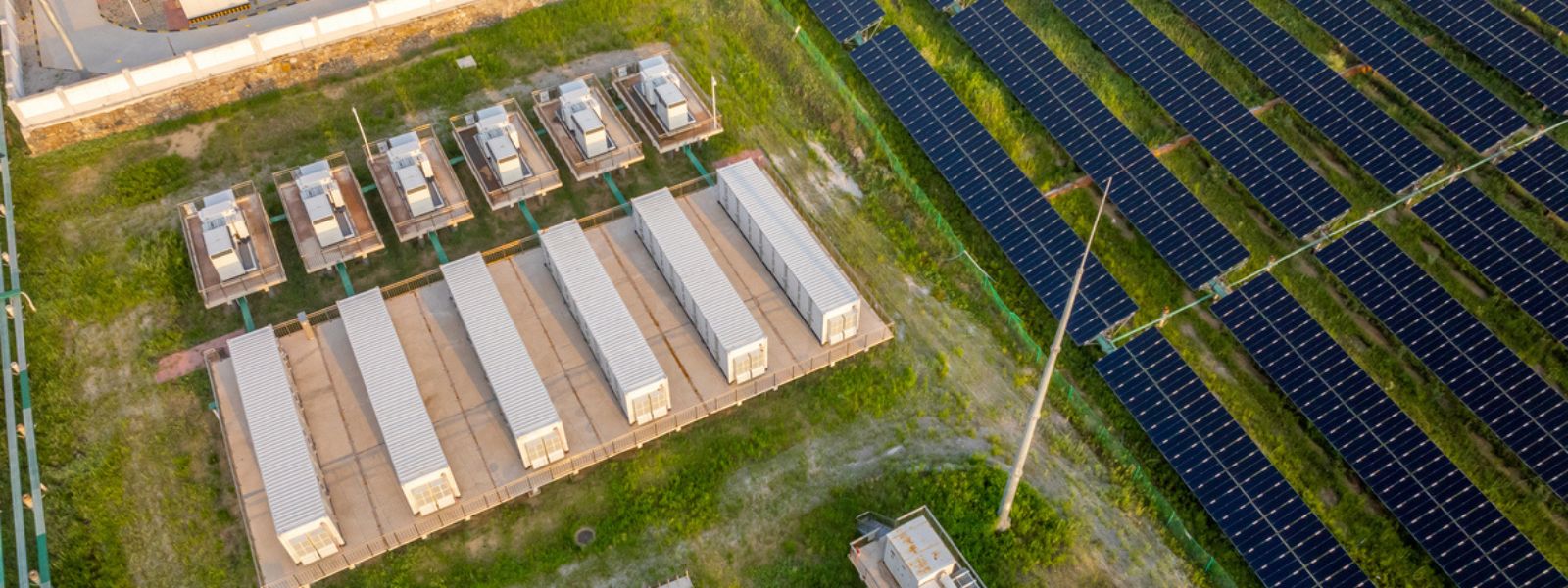
Electricity grids are entering a new era where large-scale batteries will be critical tools that provide flexibility and reliability for the grid at low cost.
As renewables surge, providing 40 per cent of global power generation in 2024, large-scale battery storage systems are also being built faster than ever. Deployment has been highest in China, which has two thirds of the world’s share of battery storage capacity, according to Rho Motion, a battery business research consultancy. The United States has the second highest share.
Canada lags behind its global peers in deploying the game-changing technology, ranking 20th in that same list. To catch up, Canadian policy makers need to encourage battery deployment by creating mechanisms that reward the reliability and flexibility the technology has to offer.
Let’s dig into some of the factors driving the battery boom, and how Canada can use them to its advantage.
Battery costs are falling fast
Batteries are a game changer for the electricity sector because they can perform tasks that were once economically and technically unviable. Not only do they store and release electricity when it is needed most, quickly balancing supply and demand to improve reliability, they also relieve power congestion when sited appropriately. This captures low-cost power, called curtailment, that would otherwise be wasted.
Those benefits, combined with rapid cost declines, are transforming the technical promise of batteries into a reality. Worldwide, battery system costs fell 40 per cent between 2023 and 2024 alone. By the end of this year, global installed battery capacity is expected to be approximately ten times larger than it was in 2022, according to the latest projections by BloombergNEF. In the first six months of 2025, U.S. storage investment reached US$14 billion, while worldwide investment is expected to reach US$66 billion this year, according to the International Energy Agency.
Investment, however, is unevenly distributed. Deployment is surging in markets where transparent price signals, procurement mechanisms, and investment incentives are driving deployment. For example, in the first six months of 2025, 80 per cent of all energy storage in the U.S. was concentrated in three states: Texas, California, and Arizona, according to the Rhodium Group’s Clean Investment Monitor project.
Canada’s progress will depend on the implementation of policy, and how effective it is at charting a course that values the deployment of large-scale batteries.
Batteries make power grids more reliable and flexible
One major advantage of battery deployment, which is already showing measurable benefits in some instances, is the improvement of grid reliability.
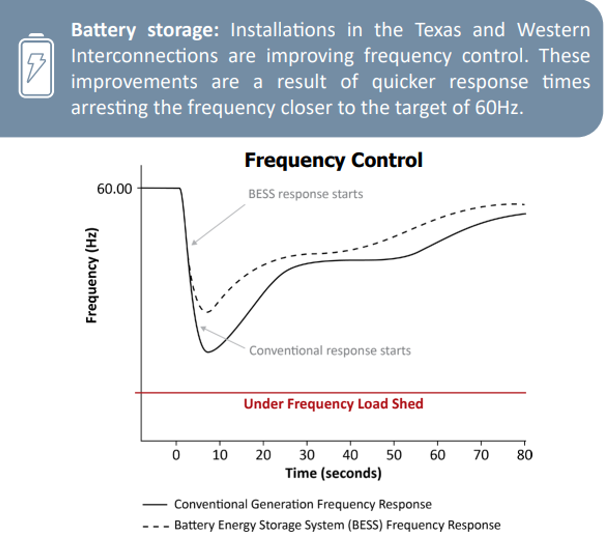
In order to understand what that means, it’s important to establish that all grids in North America operate on a delicate frequency of 60 hertz. It’s critical to maintain this frequency in order to keep all the electrical devices in people’s homes and businesses operating properly. Grid operators do this by balancing supply and demand on a second-to-second basis. If power demand exceeds supply, then the risk of a blackout increases as frequency drops. If supply exceeds demand, the frequency rises, which can damage electrical equipment.
The advantage of batteries is that they can respond to shifts in supply and demand almost instantaneously by discharging or absorbing power in milliseconds, which helps smooth out any potential shifts in frequency. That’s an advantage over traditional gas, coal, and hydro generators. The North American Reliability Corporation (NERC), the organization that sets and enforces reliability standards for grids in the U.S. and Canada, recently highlighted a notable improvement in frequency response in grids that have a higher concentration of battery energy storage systems (see Figure 1 below).
Figure 1: Batteries help maintain grid frequency by responding to demand faster than conventional sources
Batteries can also help grid operators deal with the issue of power congestion.
Power congestion occurs when an area of the grid lacks the transmission capacity needed to deliver electricity from where it’s generated to its end destination. This can become an issue in cases where intermittent renewables generate substantial amounts of power, but grid operators can’t utilize all of it and are forced to waste the excess low-cost, low-carbon power.
If we think of the grid like a highway network, instead of building more cost-prohibitive transmission lines (or lanes) to handle maximum power output (or rush hour traffic), batteries can store (divert) excess low-cost electricity and discharge it later, sort of like parking excess car traffic to help keep traffic flowing smoothly. In the second quarter of 2025, Alberta curtailed about 310 megawatt-hours (MWh) of renewable electricity—enough to power the entire town of Canmore for a day. While that might seem small compared to Alberta’s total grid demand, it’s a snapshot of a wider problem on the horizon.
As more solar and wind come online, the times when generation exceeds what the system can absorb will occur more often. Batteries can help capture that wasted surplus and store it for use later, when there is demand.
If Alberta had sufficient battery capacity, the existing transmission line between B.C. and Alberta could also be used to its full potential. At present, the Alberta grid doesn’t have the resources necessary to immediately stabilize the grid if the line disconnects so the Alberta Electricity System Operator (AESO) limits its use. The AESO is currently in the process of procuring at least 1,000 MW of frequency response to keep Alberta’s system at a constant frequency and address this reliability challenge. While the procurement didn’t specify what technology can be used, batteries are well positioned to compete when bids open up in 2026.
While there are reliability benefits to integrating batteries into the grid, the volume of batteries needed for reliability is limited. Once enough battery capacity is established to keep the grid stable, future contracts will hinge on the rise of solar and wind deployment.
Batteries can reduce costs for consumers through energy arbitrage
In addition to improving the reliability of the grid, batteries can also make money while lowering overall electricity system costs through a practice known as energy arbitrage. This is the biggest growth driver for future investment in batteries.
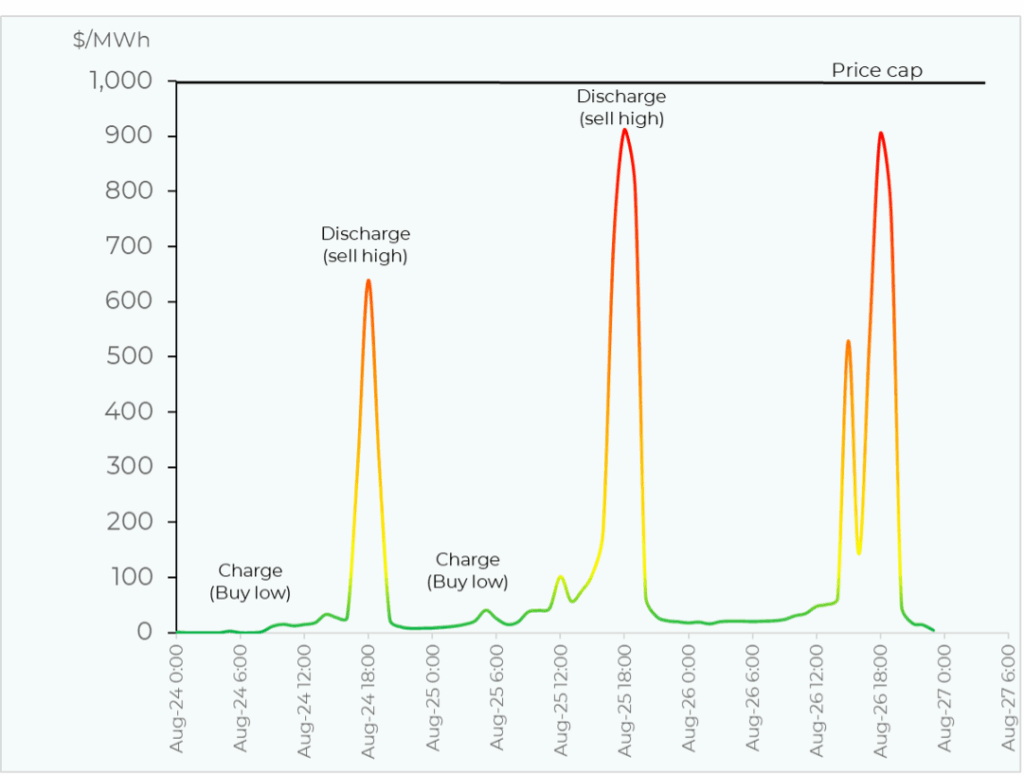
Energy arbitrage means buying power when prices are low and selling it when prices are high. In provinces with competitive electricity markets, such as Alberta and Ontario, prices rise and fall throughout the day as supply and demand shift. This volatility creates challenges for generators and consumers, but it’s where batteries earn their keep. By charging batteries when prices are low, often during sunny midday hours when renewable power is abundant, and discharging when prices spike, battery projects profit from energy arbitrage.
What’s more, as more battery projects compete to sell during high-price periods, that competition can push down peak prices and reduce extreme price spikes. This lowers the cost of serving demand at those hours and, over time, helps to reduce overall system costs and costs for consumers. See Figure 2.
Figure 2: Batteries can charge when prices are low and discharge when prices are high
Markets that allow for arbitrage have seen a surge in battery deployment. In 2024, 66 per cent of all battery storage systems in the U.S. participated in arbitrage. In Australia, battery storage investment is expected to grow sevenfold by 2027, largely because price variability creates profitable arbitrage opportunities.
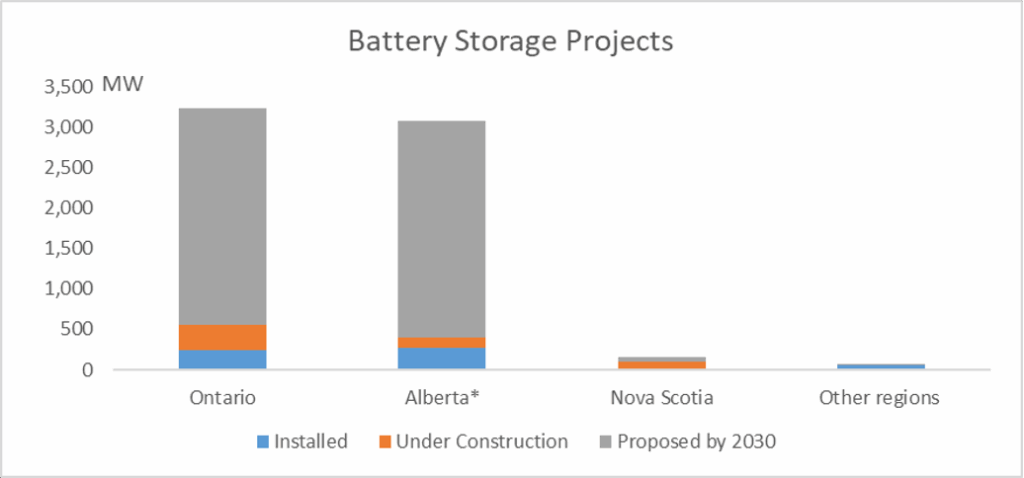
Ontario and Alberta dominate in the deployment of battery storage, where market rules allow for energy arbitrage (see Figure 3). Ontario leads all Canadian provinces in battery energy storage deployment because it is deploying both mechanisms—energy arbitrage and reliability services. In addition, the province has the advantage of granular electricity pricing. In May 2025, for example, Ontario formally shifted from a single electricity price for the entire province to a price system that varies geographically depending on the local conditions, known as locational marginal pricing (LMP). Markets that vary prices by location allow potential battery developers to optimize the location of battery deployment because it allows developers to rank different investment opportunities depending on the energy arbitrage potential for each location.
Figure 3: Canadian battery projects are concentrated in Ontario and Alberta
Provinces can clear the path for more battery deployment
System operators and utilities across Canada are starting to consider how batteries can add value to their respective grids. Once Alberta fully moves to LMP, we should expect to see more battery investment.
Provinces with dominant hydropower generation, such as Manitoba, British Columbia, and Quebec, already have a flexible source of power, but batteries can still improve grid reliability and help manage grid constraints in specific locations, such as urban areas with limited space for new infrastructure.
BC Hydro has recently issued a request for expression of interest for capacity to gather insights and inform future procurement strategies, including grid reliability services that battery energy storage projects can deliver. Other hydro-dominant provinces should start to evaluate how they can allow batteries to compete to improve the grid reliability based on current and future local needs.
Battery storage is no longer a futuristic concept—it is a fast-growing, global reality. When provinces set the right conditions, batteries can attract investment and lower overall prices.
While Canada has made some encouraging progress, its pace and scale of investment still lags behind global leaders. Aligning market structures, procurement mechanisms, and investment incentives with the proven capabilities of battery storage will be the key to unlocking its full potential. As Canada positions itself as a clean energy superpower, and provinces compete for industrial investment, battery storage will play an important part in the nation’s energy strategy.