
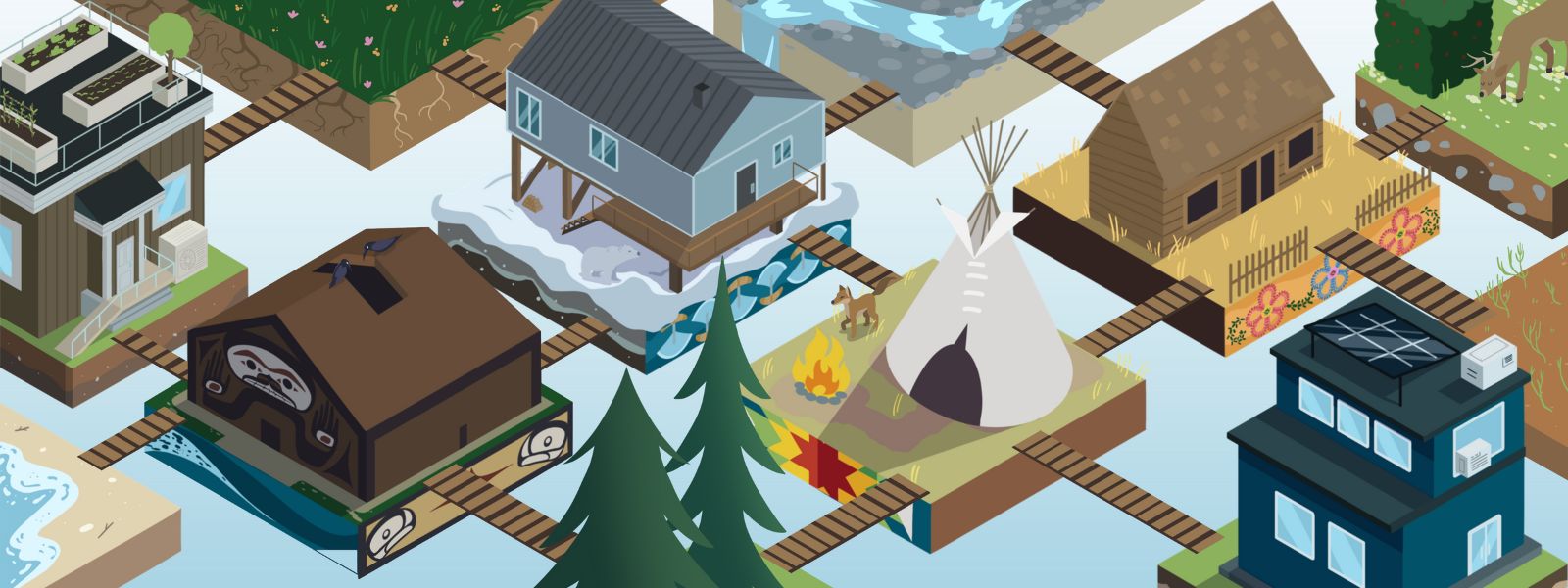
Building Strength Through Shelter
Policy prescriptions for Indigenous Healthy Energy Homes
 Download the Report
Housing inequality among Indigenous communities in Canada is an expensive problem, both in terms of dollar figures and—more importantly—lives.
Across Canada, inadequate housing is one of the most urgent challenges facing Indigenous people. The poor state of housing drives up healthcare costs and leads to unsafe, energy-inefficient housing that is vulnerable to climate disasters and not tailored to the communities living in it.
Yet research shows that healthy, safe homes are central to people’s health and well-being, not to mention a fundamental human right recognized by the Canadian Human Rights Commission. Despite the fact that housing, energy, climate resilience, and health are deeply interconnected, policies and programs too often address them independently.
In the context of climate change, failing to address inadequate housing will only increase the health risks for First Nations, Inuit, and Métis people across Canada, who are already disproportionately exposed to impacts such as wildfires and extreme heat.
Building Strength Through Shelter: Policy prescriptions for Indigenous Healthy Energy Homes—a report co-developed by the Canadian Climate Institute and Indigenous Clean Energy with support from Shared Value Solutions—emphasizes the urgency of both the housing crisis facing Indigenous people across the country and the opportunities for transformative change through collaborative policy-making. The report calls for a co-ordinated response from governments to accelerate affordable housing construction and deep retrofits through an approach called Healthy Energy Homes.
Read the report
Inadequate Indigenous housing undermines health and well-being
In Canada, Indigenous people are almost three times more likely to live in housing that needs major repairs compared to non-Indigenous Canadians.
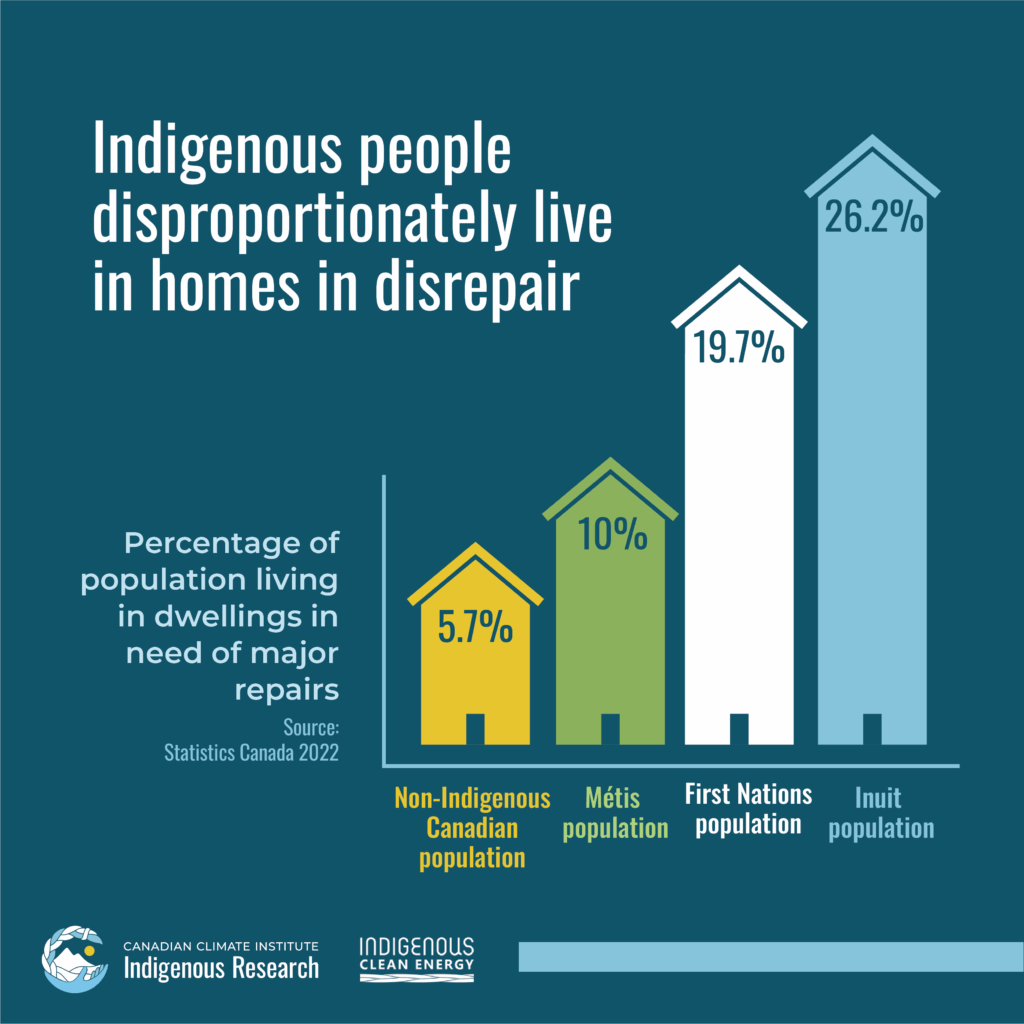
The poor state of housing in Indigenous communities—the result of the historical impacts of colonial policies and systemic discrimination—directly impacts people’s health, causing higher rates of respiratory illness, stress, and chronic disease. Issues such as mould, dampness, poor insulation, and lack of reliable heating also undermine physical, spiritual, and mental wellness.
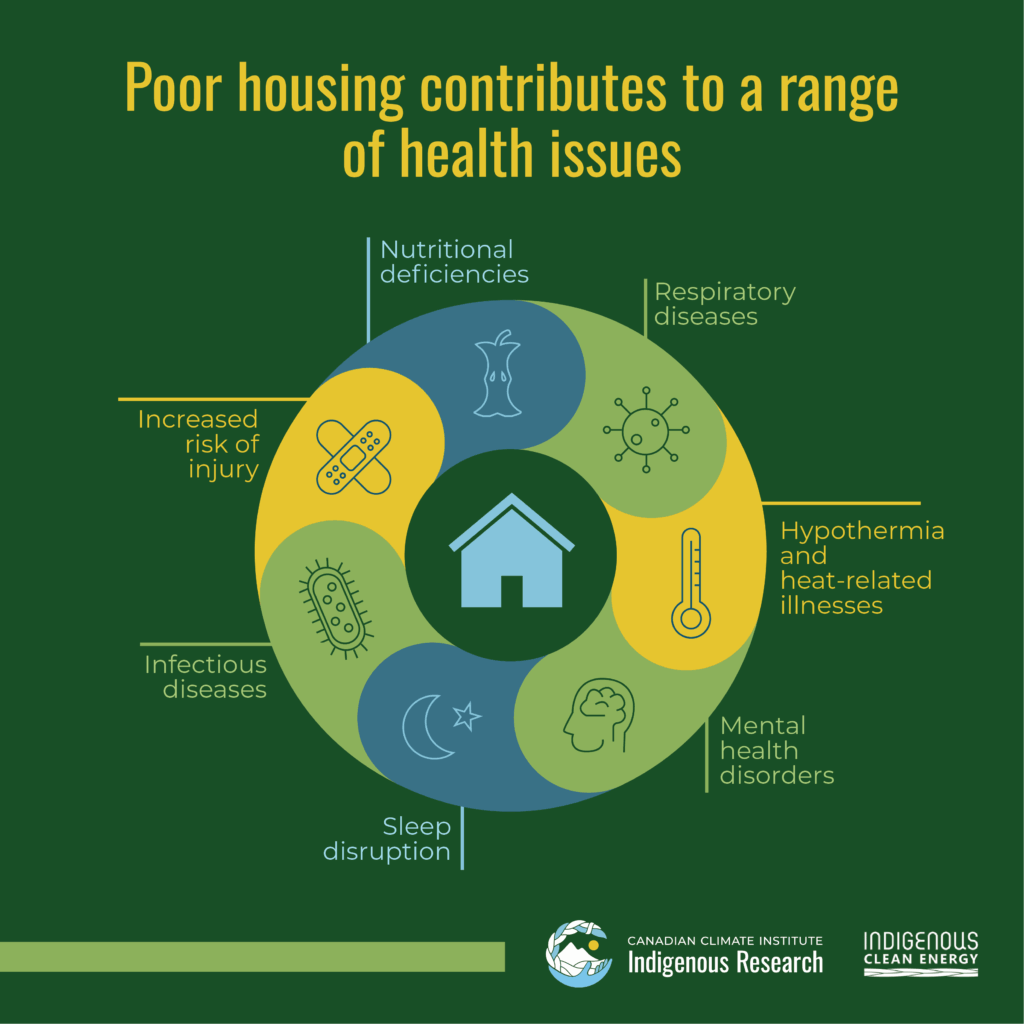
These housing-related health burdens particularly affect people in remote and northern communities, where infrastructure costs are higher and climate risks are more severe. Extreme weather events, shifting ecosystems, and unpredictable seasonal cycles increase risks for homes already in fragile condition.
What are healthy energy homes?
Healthy Energy Homes is an approach to housing that prioritizes the development of Indigenous housing that is energy efficient, climate resilient, and supports overall well-being.
By improving energy efficiency, these homes reduce emissions, lower energy bills, improve indoor air quality, and alleviate pressure on health care systems. These benefits are particularly important in Indigenous communities, where wellness is understood more wholistically—a term that broadly encompasses physical, mental, and spiritual health, including relationships to land, water, and all relations.
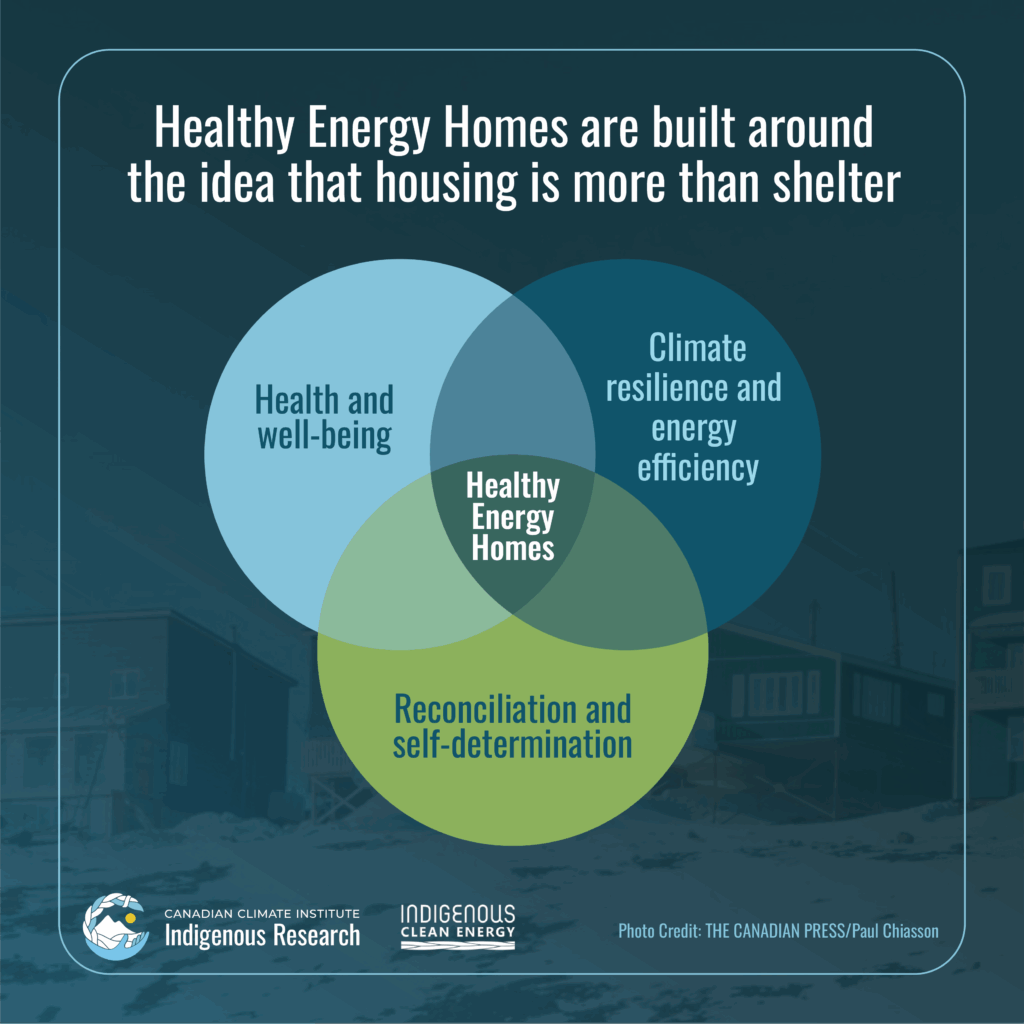
Across Canada, many Indigenous communities and organizations are already leading initiatives in line with the Healthy Energy Homes approach, designing and implementing housing that improves health outcomes, energy efficiency, climate resiliency, and more.
In order for that progress to continue, governments need to remove barriers and work in partnership with Indigenous communities to plan, develop and invest in advancing Healthy Energy Homes.
Climate impacts magnify health risks in Indigenous housing
Climate change exacerbates health risks in Indigenous communities, making housing that’s poorly constructed or in disrepair even more dangerous to residents.
For instance, aging homes are more vulnerable to wildfire smoke infiltration. They expose occupants to air pollutants, which can lead to higher rates of hospitalization.
Indigenous people are 30 times more likely to be affected by wildfires than non-Indigenous Canadians, according to Natural Resources Canada.
Insufficient passive ventilation and air conditioning can make it difficult to manage heat waves, increasing the risk of heat-related illness and mortality.
Climate change also exacerbates coastal erosion and thawing permafrost, which can destabilize buildings and exacerbate radon gas exposure, often forcing relocation.
Our previous research, Beyond Sustainability: The Power of Indigenous Healthy Energy Homes, showed that housing, health, and energy are interconnected. Energy efficiency and clean energy systems are not only climate solutions. Alongside housing, they are social determinants of health.
Why it pays to invest in Indigenous housing
Inadequate and poorly constructed Indigenous housing has significant impacts on people’s health and that comes with substantial costs. For example, the cost of admitting an Inuit infant in the Arctic to hospital to treat a lower respiratory tract infection can add up to as much as $60,000 per visit.
Cost to treat an Inuit infant in the Arctic for a lower respiratory tract infection in the hospital, according to the research article: The cost of lower respiratory tract infections hospital admissions in the Canadian Arctic.
The projected total annual costs in Canada associated with not remediating the homes of people with severe asthma affected by mould and dampness, according to: Sustainable Home Environments: Proactively Addressing Sickness-Related Damp and Moldy Environments to Reduce the Impact on the BC Health Care System.
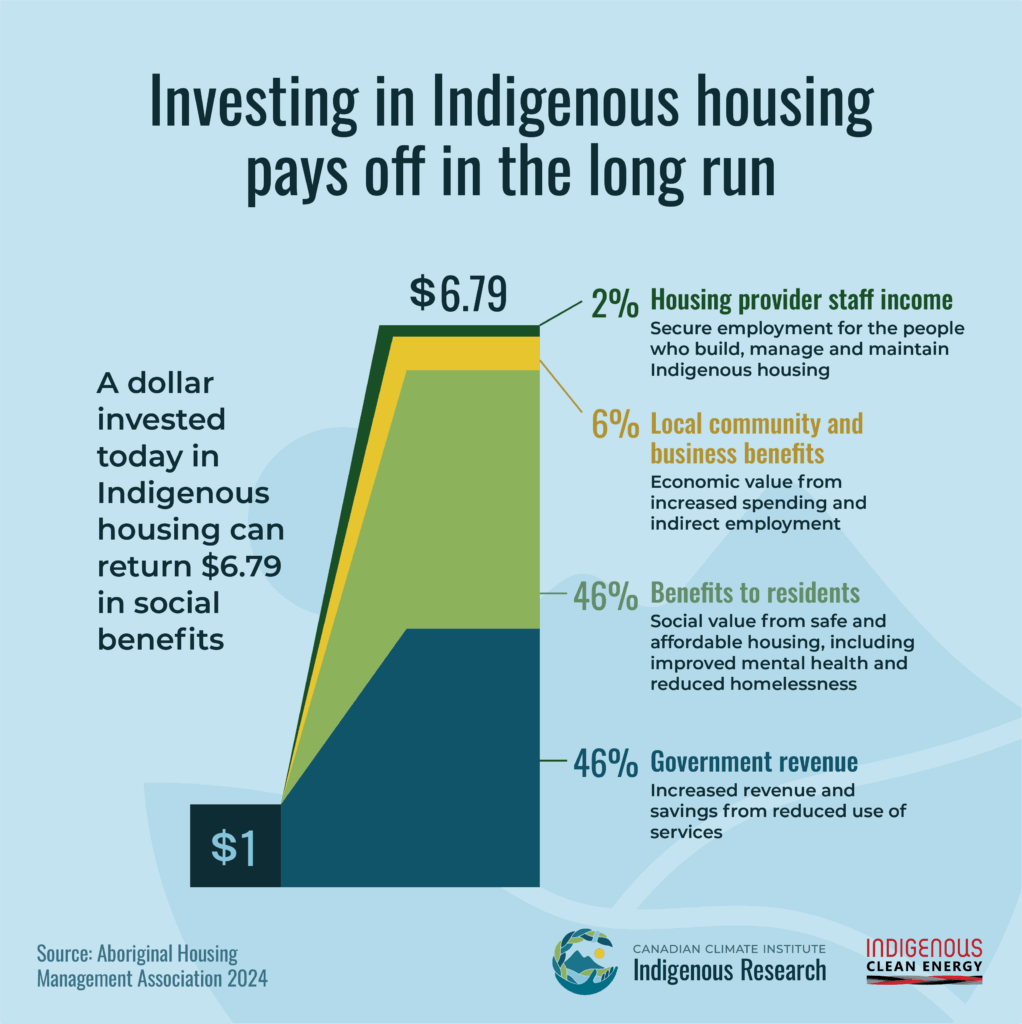
Investing in Healthy Energy Homes is cost-effective. Every dollar invested in Indigenous housing can provide a social return on investment of around $6.79, including an estimated $3.12 in government savings, according to the (B.C.) Aboriginal Housing Management Association.
Co-ordinated action is needed to improve Indigenous housing
Federal, provincial, territorial, municipal, and Indigenous governments across Canada all play roles in health, energy, and housing initiatives. But current policy and funding approaches work in rigid, short-term siloes, which fail to address the links between housing, well-being, energy efficiency, and climate resilience.
Addressing unsafe and inadequate housing in Indigenous communities requires co-ordinated action with long-term, flexible funding, shared accountability, capacity development, and recognition of the co-benefits across health, housing, energy and climate policy domains. Working together with Indigenous leadership is essential to closing the housing gap and supporting a healthier, more resilient future.
The path toward Healthy Energy Homes should look different in every community, reflecting local values, priorities and Indigenous governance systems. Financial pathways to get there must be led by Indigenous rights holders to ensure they reflect distinct community needs and advance self-determination.
Recommendations for healthy energy homes
Smart, co-ordinated policy that reorients existing approaches is required to successfully implement Healthy Energy Home solutions. Our report recommends all orders of government:
- Co-ordinate and integrate government action on Indigenous housing.
Federal, provincial, and territorial governments should reduce duplication. They should also remove barriers that are standing in the way of creating better Indigenous housing. - Co-develop policies and programs with Indigenous leadership.
Federal, provincial, and territorial governments must co-develop policies with First Nations, Inuit, and Métis leadership. This process will ensure housing meets cultural needs and regional climate conditions. - Commit to long-term investment agreements.
Multi-year funding agreements with Indigenous nations for housing, retrofits, and health monitoring can provide stability for long-term planning. - Provide flexible funding options.
Offering a range of funding models can allow Indigenous communities to choose what works best for them. - Measure the broader benefits and impacts of investments in better housing.
Investing in better Indigenous housing means broader health, cultural, social, and environmental benefits. Including these social aspects into the costs-benefits analysis will support evidence-based decision-making. - Ensure funding programs are accessible and capacity-responsive.
Streamlining application processes and building community capacity will help deliver housing with support for training, skill building, and jobs.
Related publications
Stay connected
Sign up here to receive future research and policy analysis from the Canadian Climate Institute. To get quarterly updates from the Indigenous Research team, sign up here.
For any inquiries please contact: indigenousresearch@climateinstitute.ca