figures

See our report for context. All text and graphs are Creative Commons licensed and free to use with attribution.

Figure 1

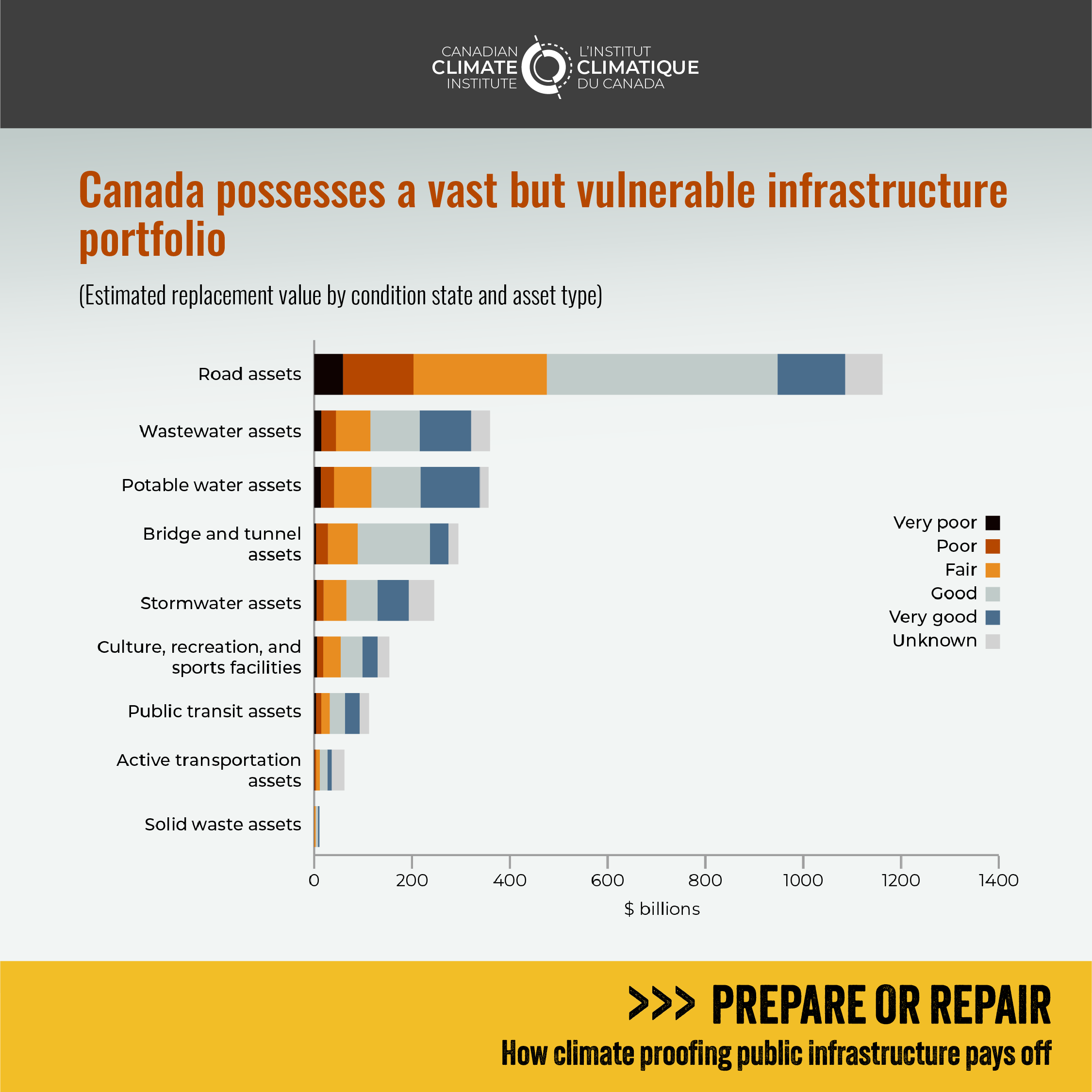
Figure 1 shows that Canada possesses a vast but vulnerable infrastructure portfolio. A good share of road assets, wastewater assets, portable water assets, bridge and tunnel assets, stormwater assets, culture, recreation and sports facilities assets, active transportation assets, and solid waste assetsare in very poor, poor or fair condition.

Figure 2

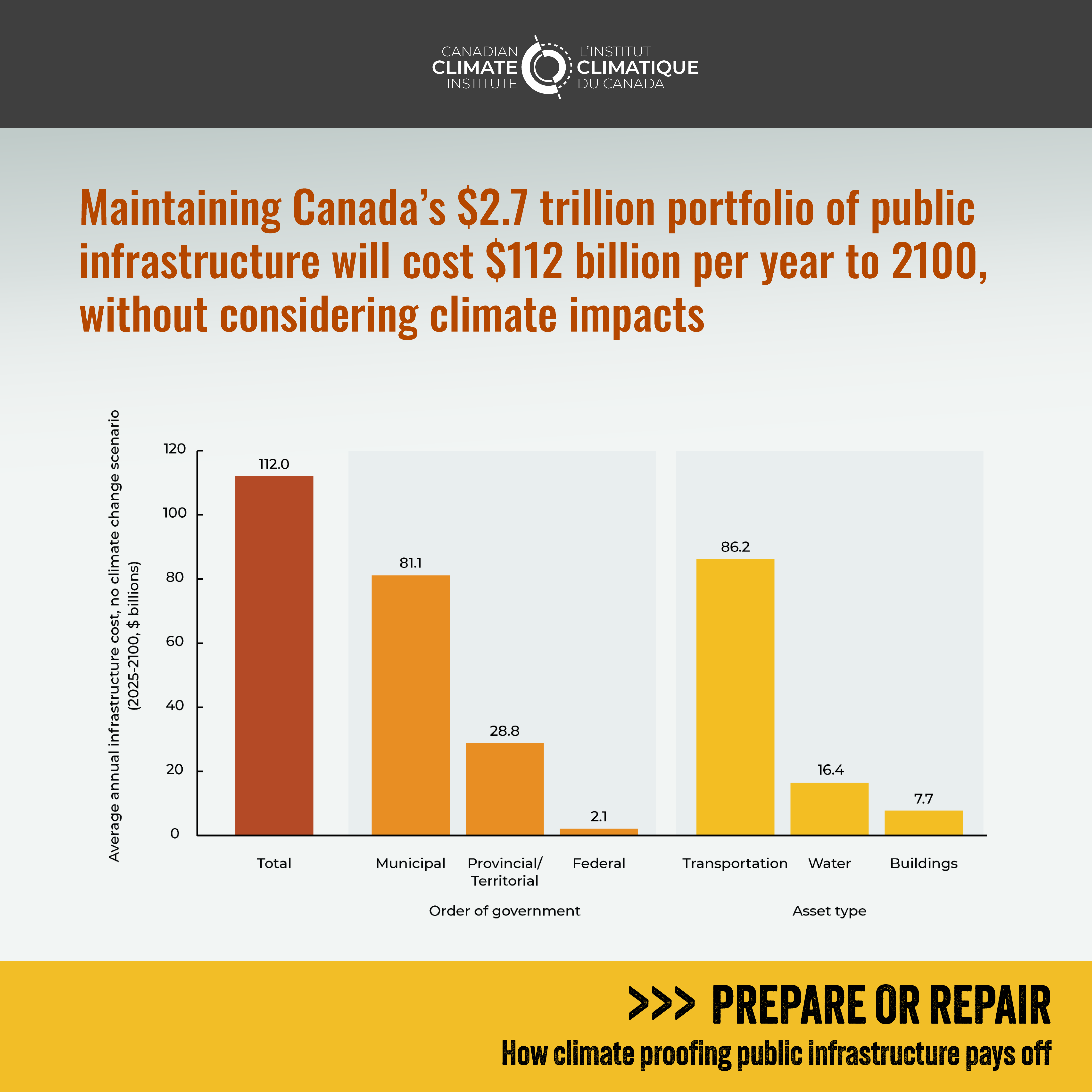
Figure 2 shows that maintaining Canada's $2.7 trillion portfolio of public infrastructure will cost $112 billion per year to 2100, without considering climate impacts. Most of the costs will be beared by municipalities and most of the cost will go to transportation.

Figure 3

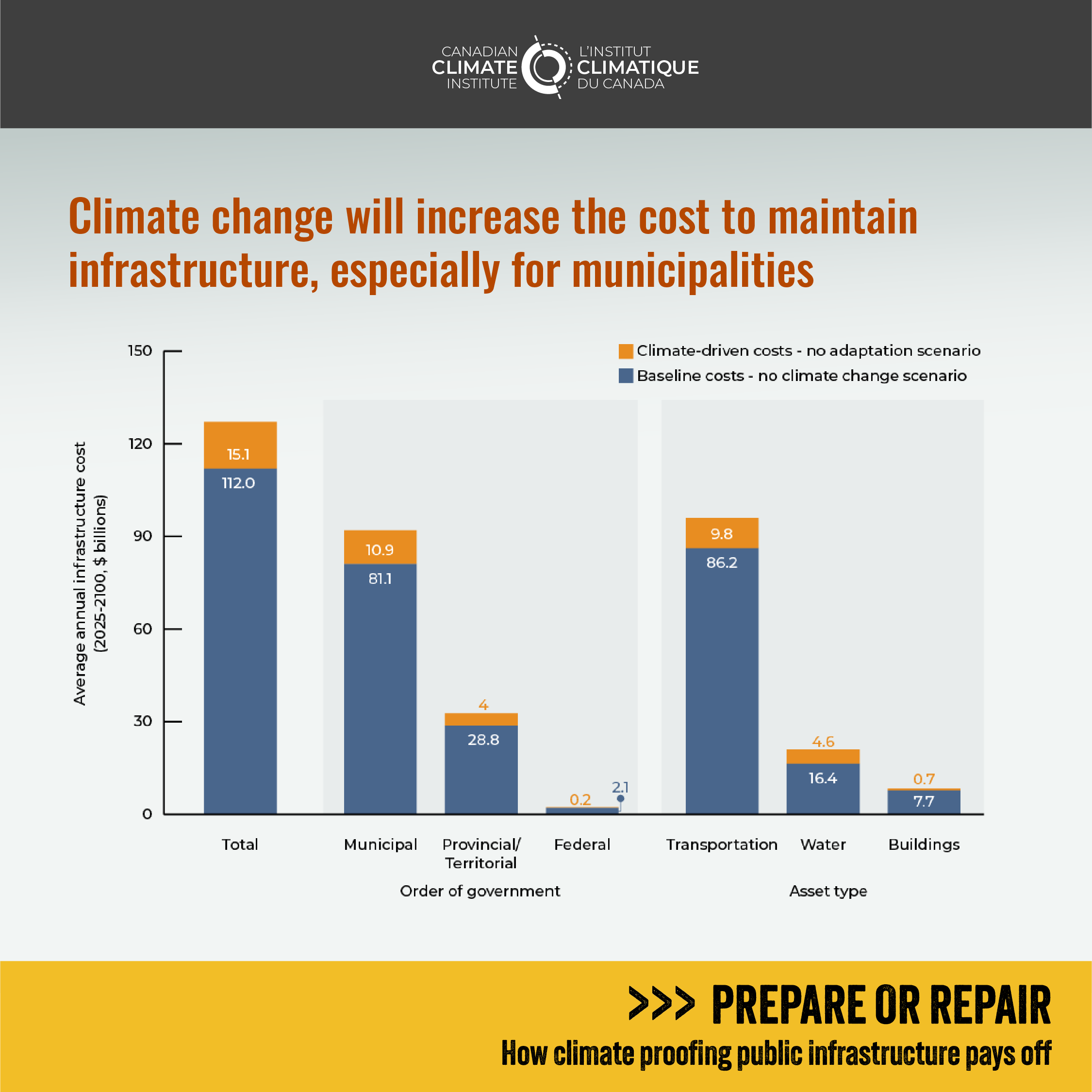
Figure 3 shows that climate change will increase the cost to maintain infrastructure, especially for municipalities.

Figure 4

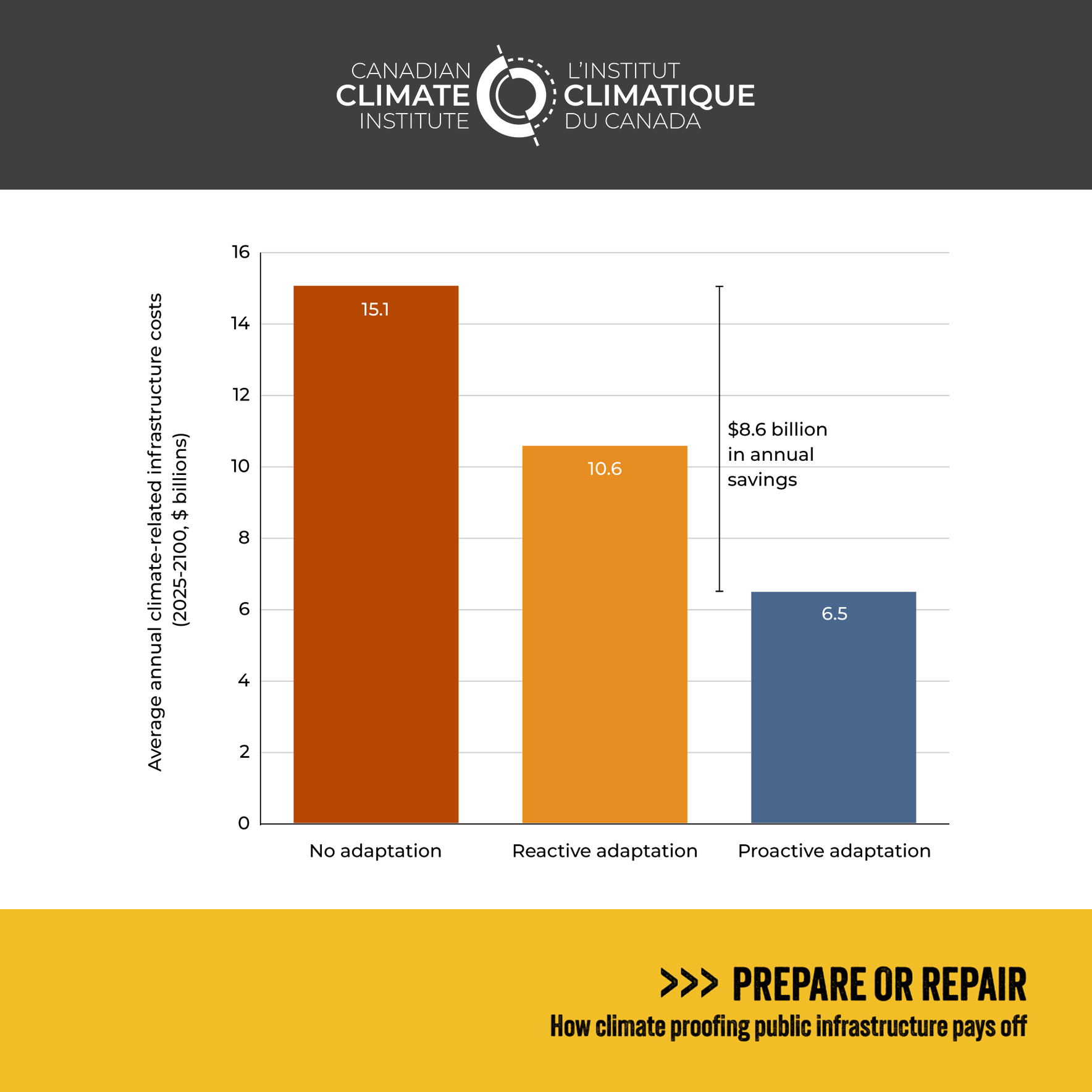
Figure 4 shows that proactive adaptation reduces climate-related infrastructure costs by nearly two-thirds. Compared to a no adaptation scenario, proactive adaptation saves $9.9 billion in annual savings.

Figure 5

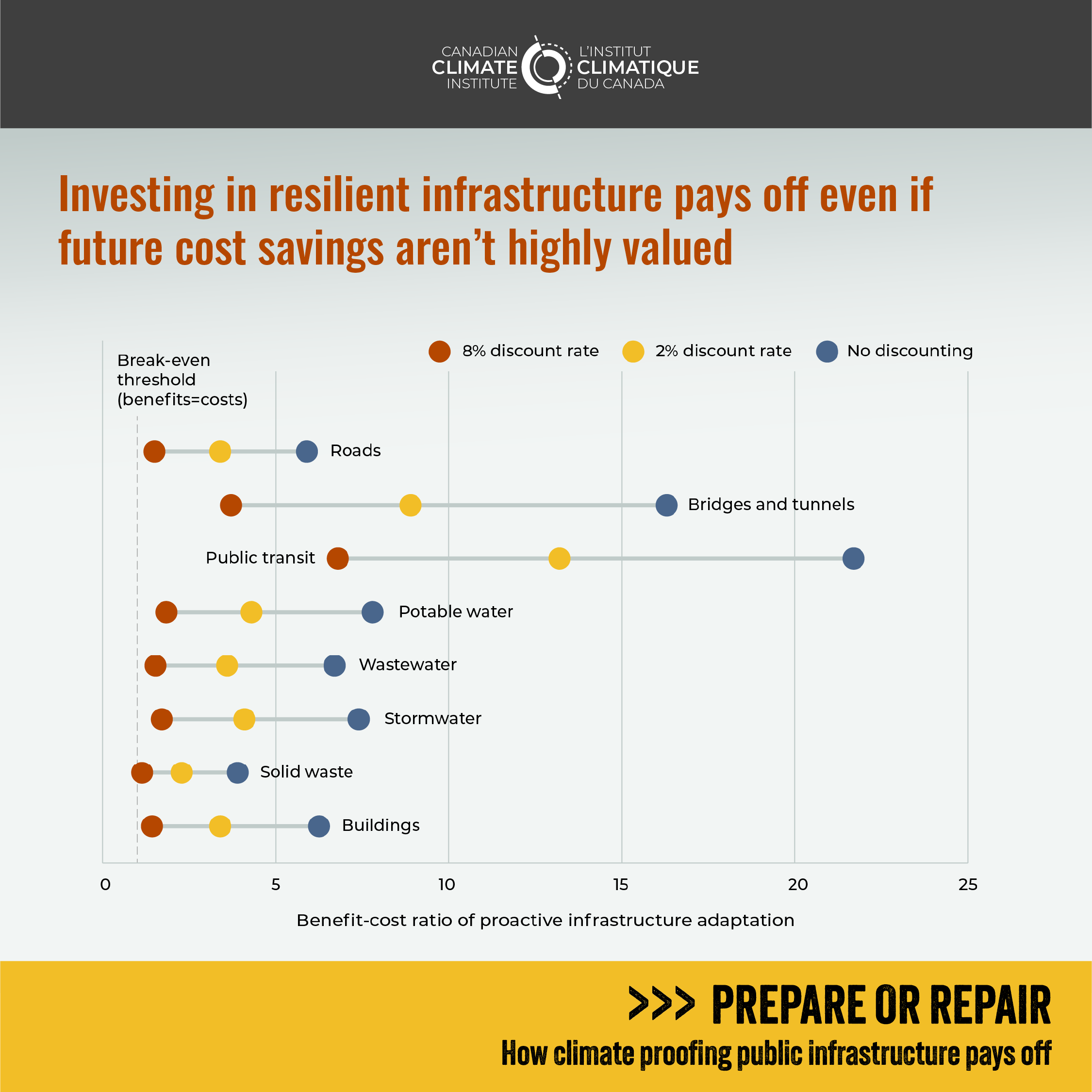
Figure 5 shows that investing in resilient infrastructure pays off event if future costs savings aren't highly valued.

Figure 6

Figure 6 shows that proactive adaptation quickly increases the share of resilient infrastructure assets. In a no adaptation scenario, 0% of assets are adapted. This share grows to 78% in a reactive adaptation scenario, and to 94% in a proactive adaptation scenario.

Figure 7

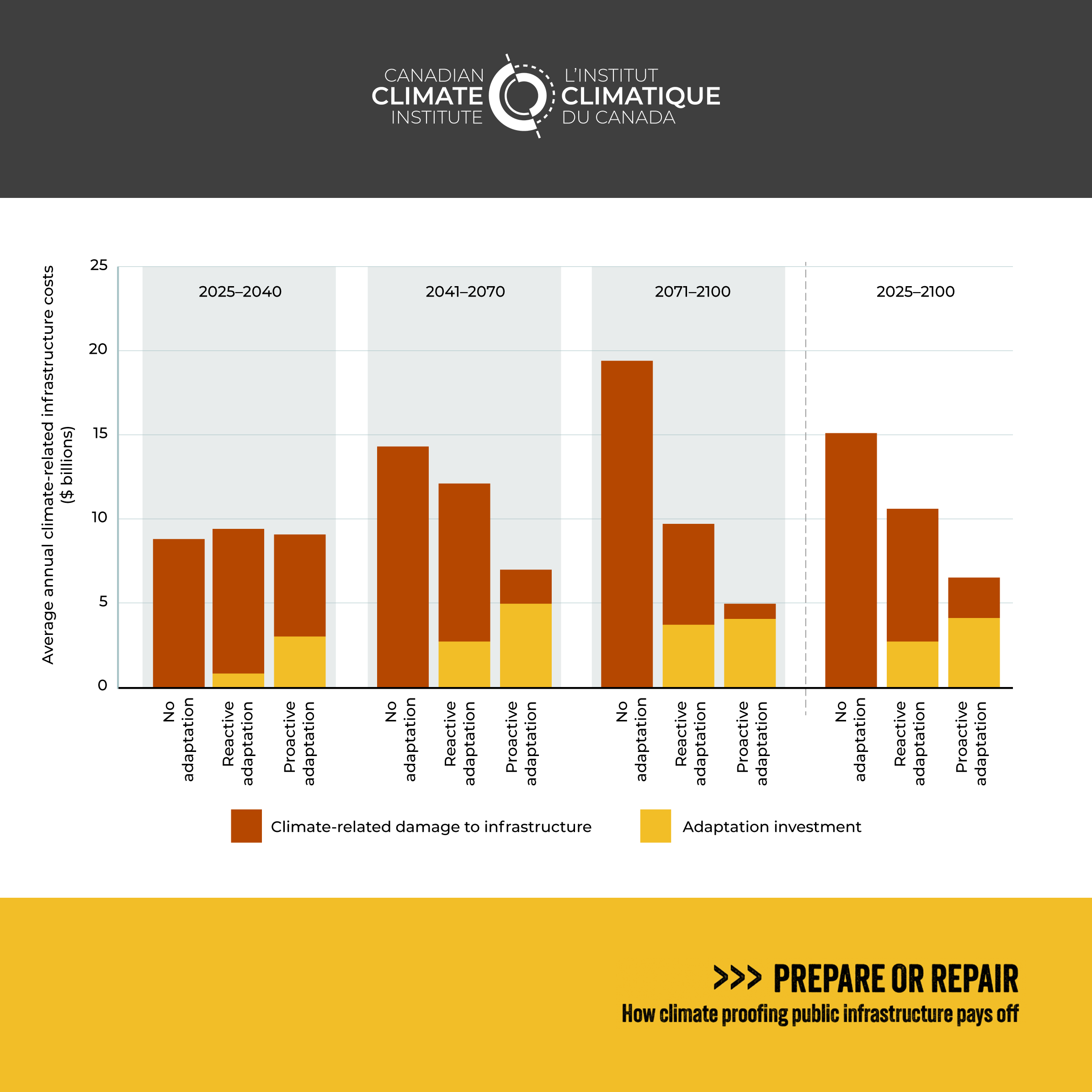
Figure 7 shows that proactive adaptation investment reduces overall costs over time, comparing a scenario with no adaptation, a scenario with reactive adaptation and a scenario with proactive adaptation.

Figure 8

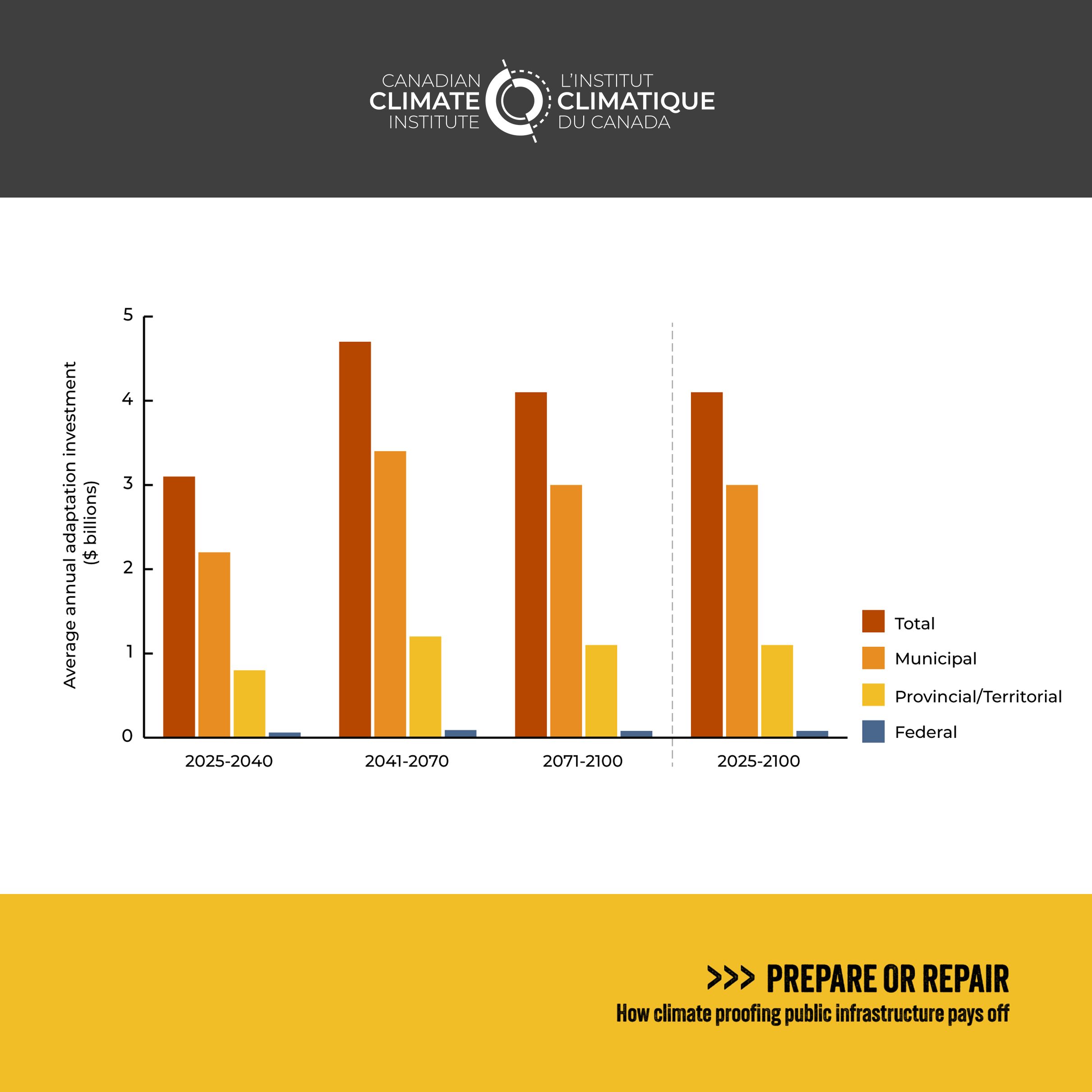
Figure 8 shows that proactive adaptation will require major investments from now and until 2100, with most falling to municipal governments.

Figure 9

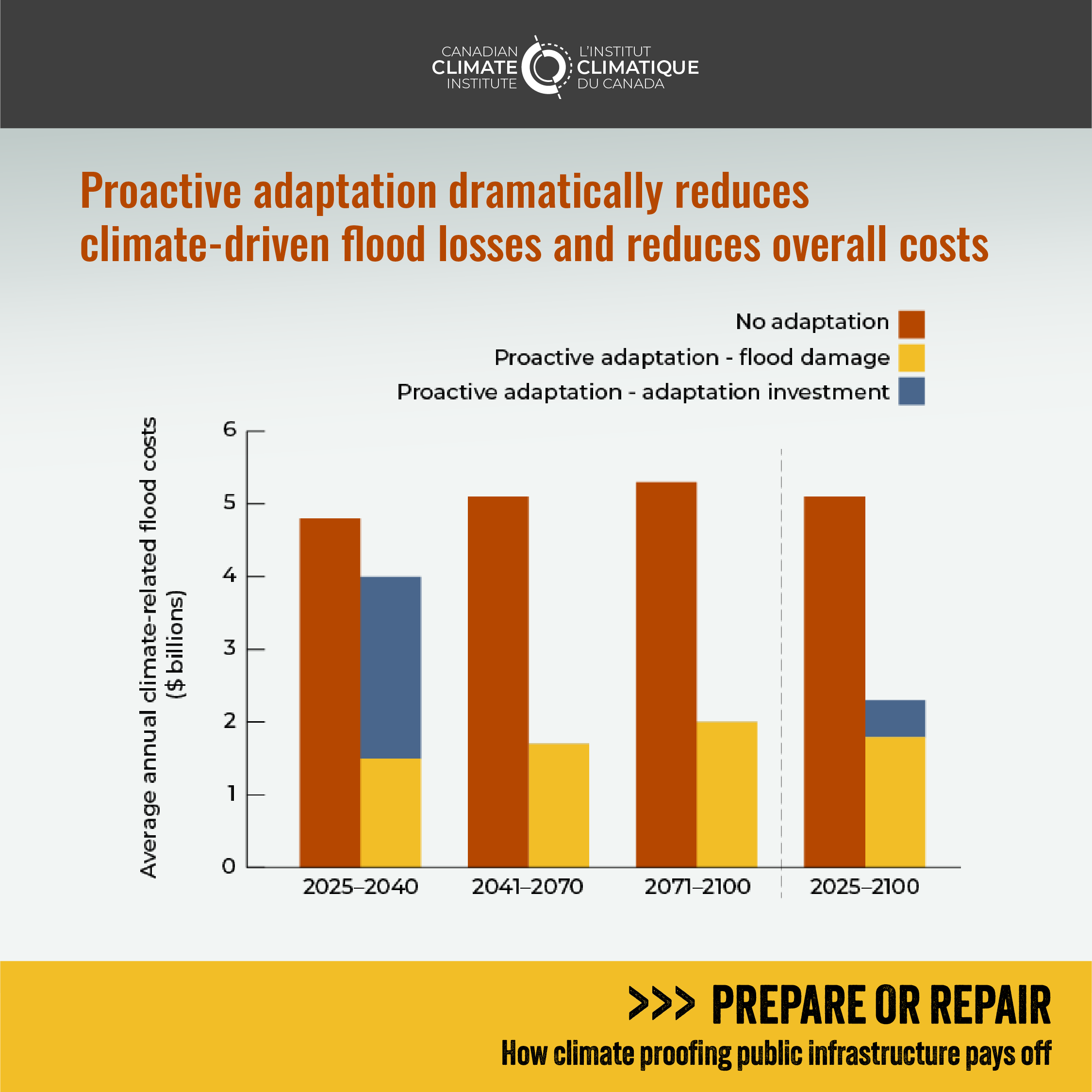
Figure 9 shows that proactive adaptation dramatically reduces climate-driven flood losses and reduces overall costs by 2100, compared to a no adaptation scenario.

Figure 10

Figure 10 shows that higher global emissions increase infrastructure damage costs and heighten uncertainty. In a no adaptation scenario, climate-related damages are, on average, $28.2 billions higher in a high emissiosn scenario compared to a low emissions scenario.

Figure 11

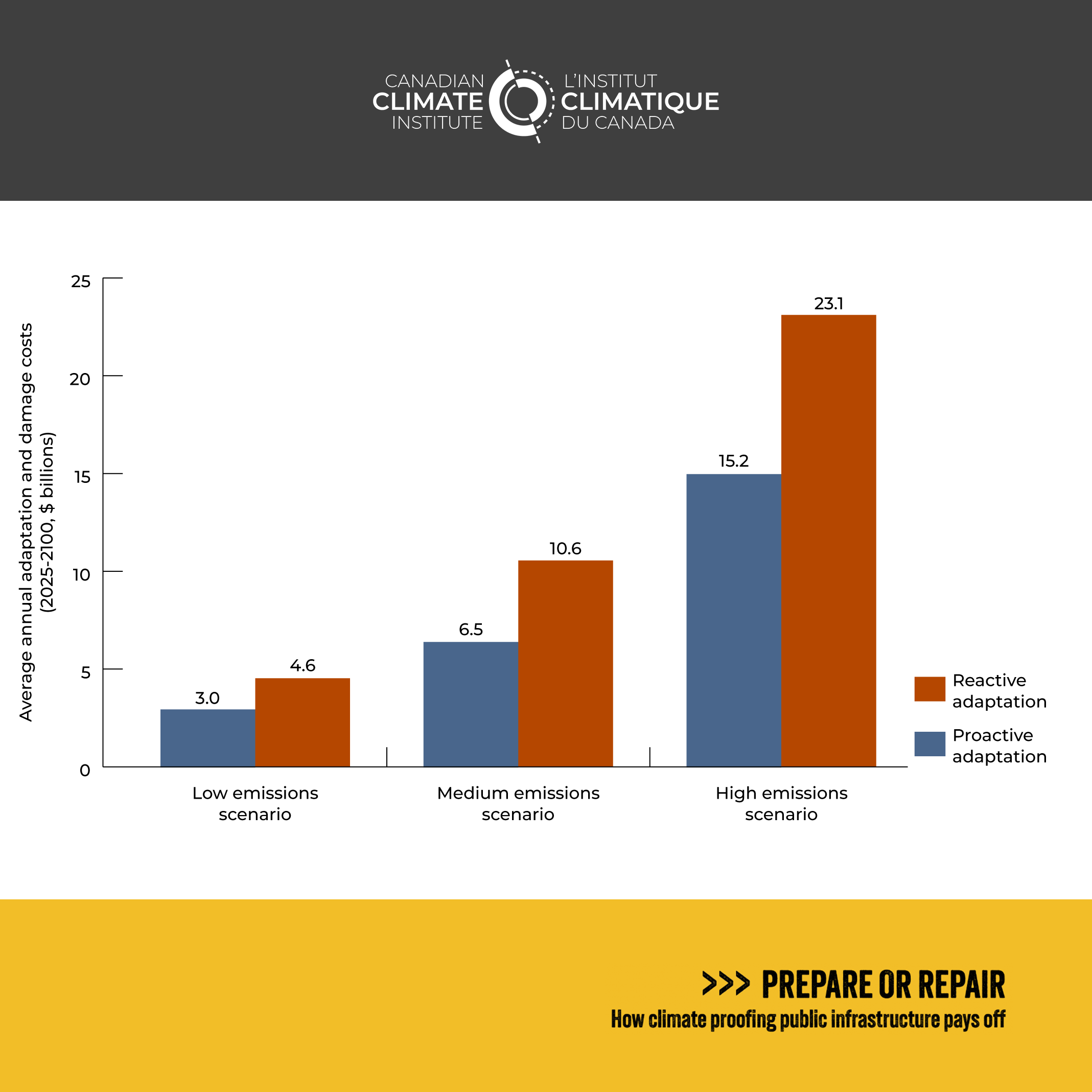
Figure 11 shows that climate costs rise sharply with warming, making proactive adaptation more critical. Reactive adaptation in a high emissions scenario is $18.5 billions higher than in a low emissions scenario. Proactive adaptation in a high emissions scenario is $9.9 billions higher than in a low emissions scenario.