
Prepare or Repair
How climate-proofing public infrastructure pays off
 Download the Report
Editor’s note: Prepare or Repair has been updated as of April 2026 to reflect a correction to the modelling results provided by a third-party consultant. Following publication of the report, the consultant provided a corrected version of results that differed from those originally supplied.
The correction impacts some of the figures in the report. In particular, the original February 2026 version stated that proactive infrastructure adaptation investment of $3 billion per year would generate net savings of up to $9.9 billion annually. Corrected results show that proactive investment of $4.1 billion per year would generate savings of up to $8.6 billion annually. Figures 4, 7, 8, 10 and 11 have been updated to reflect these changes.
These corrections do not affect the report’s overall conclusions and recommendations.
The Canadian Climate Institute is committed to accuracy and transparency in our analysis and publications. We have updated the report and all related materials to reflect the corrected modelling results.
Proactive investments to adapt Canada's roads, bridges, storm sewers, and water treatment systems for rising heat and heavy rain could save governments up to $9 billion in infrastructure costs each year.
That’s one key finding from the Canadian Climate Institute’s report, Prepare or Repair: How climate-proofing public infrastructure pays off.
The new research finds that if governments invest in adapting public infrastructure to climate risk, they will avoid billions of dollars a year in infrastructure damage while also protecting the broader economy from cascading impacts.
Why Canada’s infrastructure is vulnerable
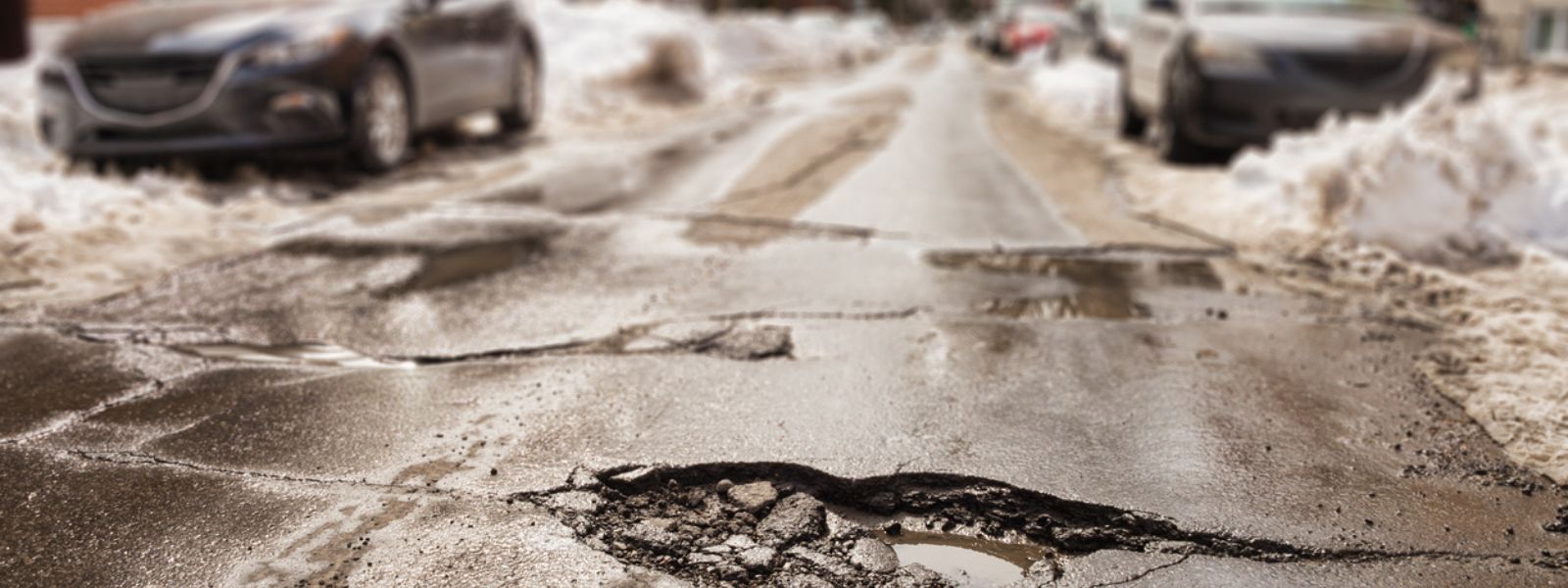
Decades of postponing maintenance have left vital infrastructure vulnerable. Roughly 14 per cent of the country’s roads, bridges, storm sewers, and water treatment systems are currently in poor condition or worse.
Climate change is compounding the challenge. From rising heat buckling roads to heavy rains overwhelming sewer systems, the risks are more than just a question of mounting repair costs; when climate-driven pressures wreak havoc on public infrastructure, communities are stranded, supply chains are interrupted, and businesses and local economies are disrupted.
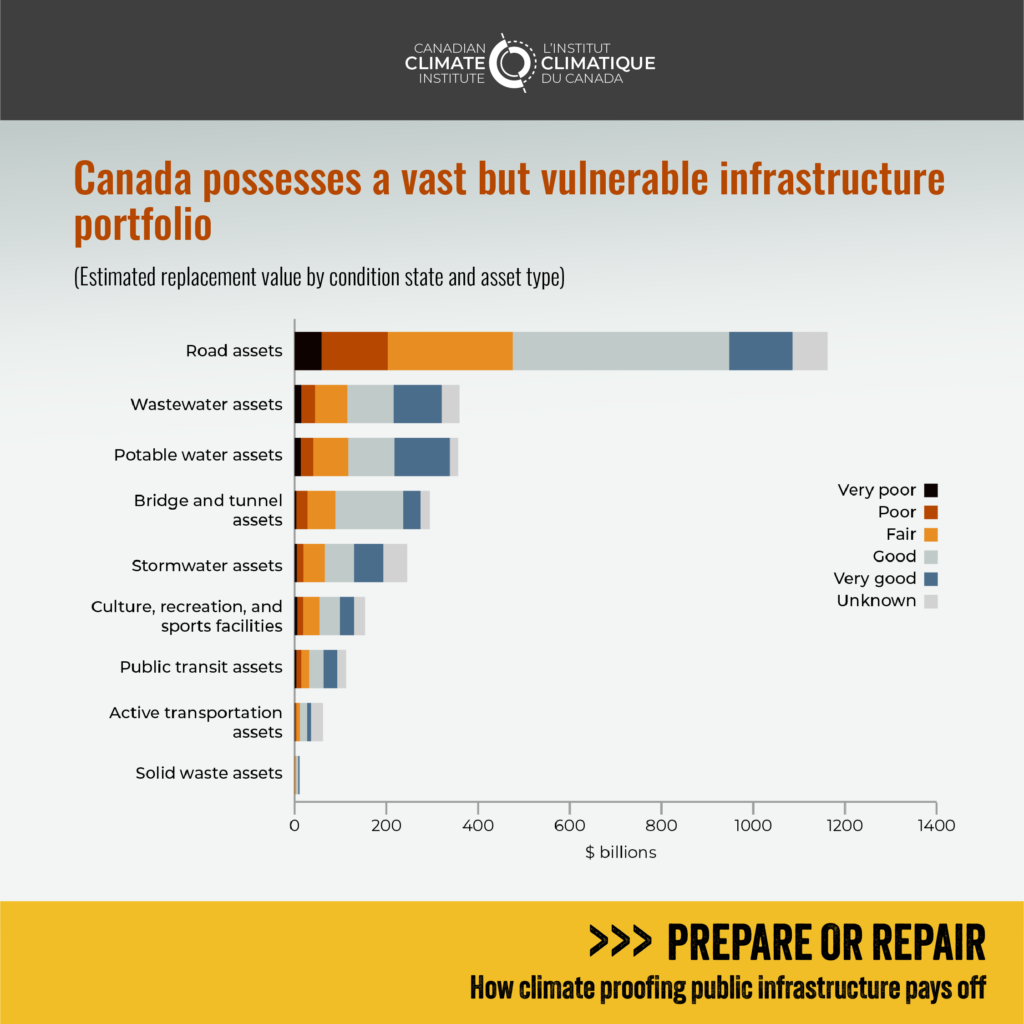
Without adaptation, rising heat and heavy rainfall will increasingly damage public infrastructure across the country. The impacts will be especially amplified in smaller, rural, Northern, and Indigenous communities, which often face higher climate exposure and inequities in quality, safety and access to essential infrastructure.
Investing now in resilient roads, bridges, sewers, and water systems will help protect families, businesses, and communities from climate threats.
Proactive climate adaptation pays off
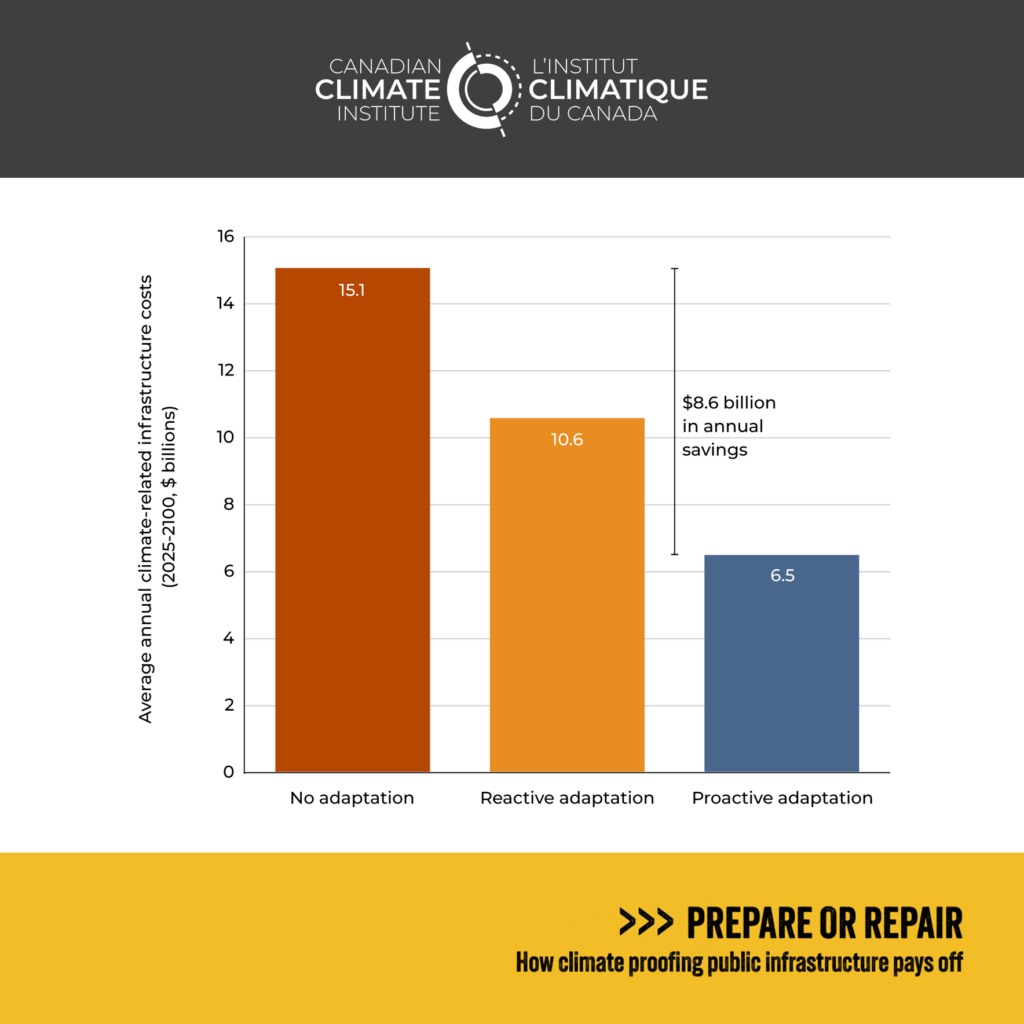
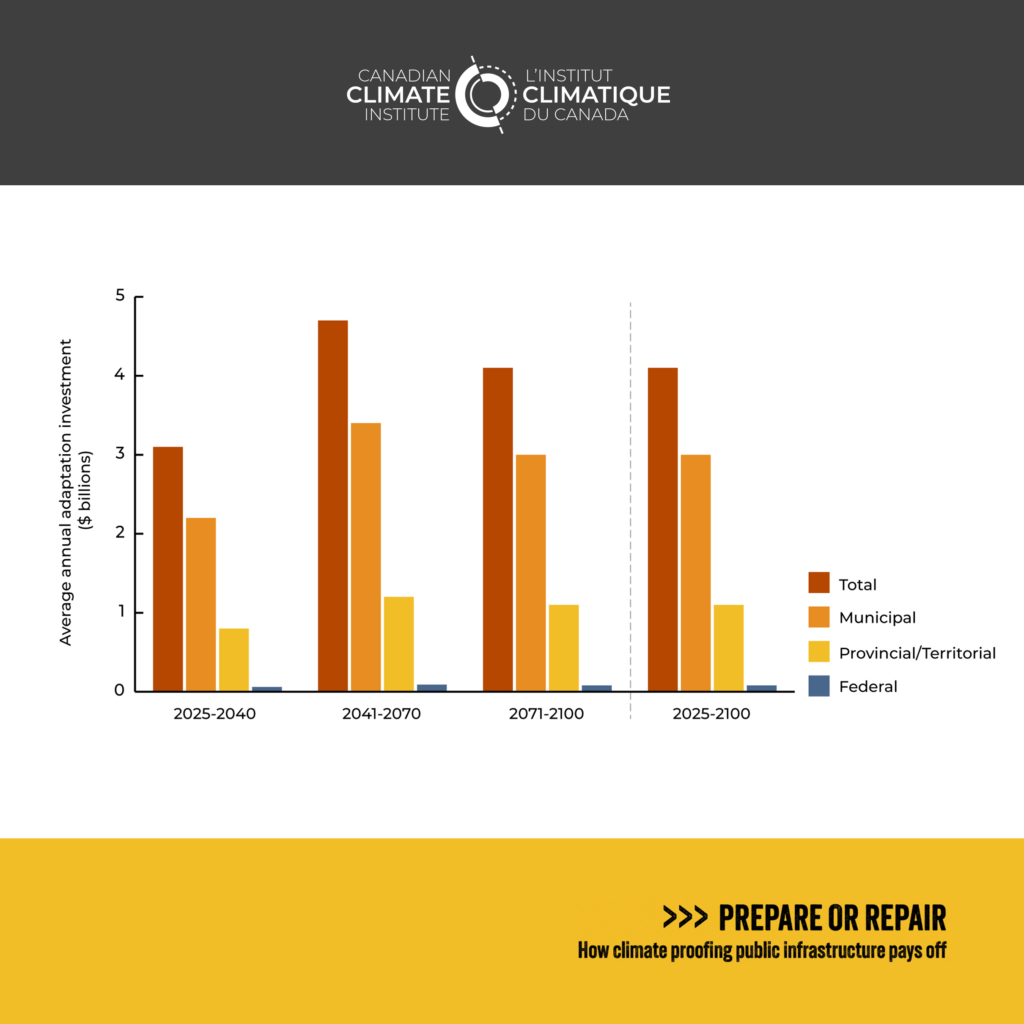
Fortifying Canada’s aging public infrastructure against extreme rainfall and rising heat—which were the two climate-driven impacts analyzed in the report—will require early and sustained investment. The Climate Institute’s report estimates it would cost an average of about $4 billion per year—roughly 3.5 per cent more than the current cost required to keep public infrastructure in good repair.
In return, the analysis finds governments would save between $4.1 billion and $8.6 billion a year in estimated annual infrastructure maintenance and replacement costs. The full benefits are likely higher due to the wider economic benefits of avoiding major disruptions to transportation corridors, water, and sewer systems, which was not included in the analysis.
While proactive adaptation greatly reduces the rise in infrastructure costs, it does not eliminate it completely. Altogether, adaptation investments and unavoidable climate damage would still increase infrastructure spending by about $6 billion yearly on average until 2100. Municipalities would bear most of these costs.
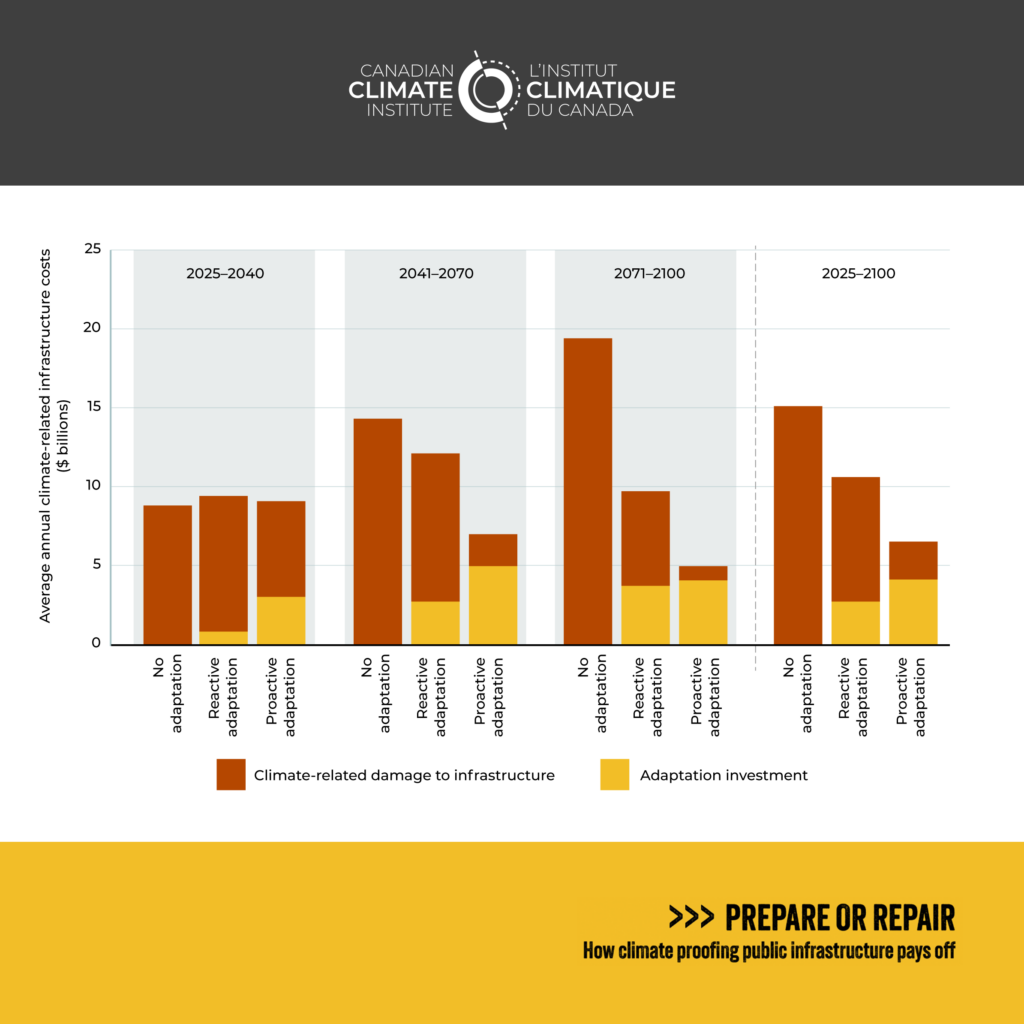
The full costs of not adapting are even higher than these numbers: the report analysis did not include the broader economic impacts of damage to private property and disruptions to essential services, business, and trade. It also did not include costs from other climate-driven impacts that are more challenging to model consistently at a national scale including wildfires, flooding, permafrost thaw, and storms.
Municipalities need support to adapt infrastructure
The findings are clear that proactive adaptation will deliver broad public benefits, but most of the upfront costs fall on municipal governments, which own and operate more than 60 per cent of Canada’s public infrastructure. On their own, municipalities do not have the financial tools to pay for large, preventative investments in infrastructure adaptation.
Between 2025 and 2100, municipalities will bear 72 per cent of all investment costs across the country to adapt infrastructure to rising heat and extreme rainfall. Other climate-driven threats, such as more frequent and severe flooding, will require additional investment—adding further pressure to municipal and other government infrastructure budgets.
The good news is there are clear actions that all orders of government can take to address this gap and protect families, communities, businesses and the broader economy from escalating climate threats.
Six ways governments can overcome barriers to proactive adaptation
To make sure public infrastructure in Canada is more resilient to the impacts of climate change, federal, provincial, and territorial governments should:
- Expand funding for infrastructure adaptation and modernize financial tools available to municipalities and other infrastructure owners—including Indigenous governments—to finance resilience upgrades.
- Plan, operate, maintain, and renew public infrastructure so it continues to function safely and reliably under future climate conditions.
- Strengthen climate hazard data and mapping nationwide to support consistent, risk-informed infrastructure decision-making.
- Accelerate updates to infrastructure codes and standards so that new and renewed infrastructure is built to withstand Canada’s changing climate.
- Ensure all public infrastructure spending consistently accounts for climate risk and supports infrastructure owners in reducing long-term vulnerability.
- Tailor programs to support the most vulnerable communities and critical infrastructure.
This work was supported by funding from Insurance Bureau of Canada, the Federation of Canadian Municipalities, and Climate Proof Canada. The Canadian Climate Institute undertook the project in alignment with its core research priorities and maintained full independence over the research design, methods, results, recommendations, and external communications.
Related publications
Stay connected
Don’t miss the latest from the Canadian Climate Institute.
Sign up to receive future research from the Canadian Climate Institute, as well as timely policy analysis, blogs, and event invitations.
Support our work by donating to the Institute.