Unhealthy, substandard housing and high energy costs are among the most urgent challenges facing Indigenous people in Canada, yet current measures to close the housing gap fall short due to siloed, complex policies that favour short-term solutions over long-term resilience. New research from the Canadian Climate Institute and Indigenous Clean Energy recommends governments adopt a new approach to prioritize the development of Indigenous housing that’s energy efficient, resilient to climate-related threats, and supports overall well-being.
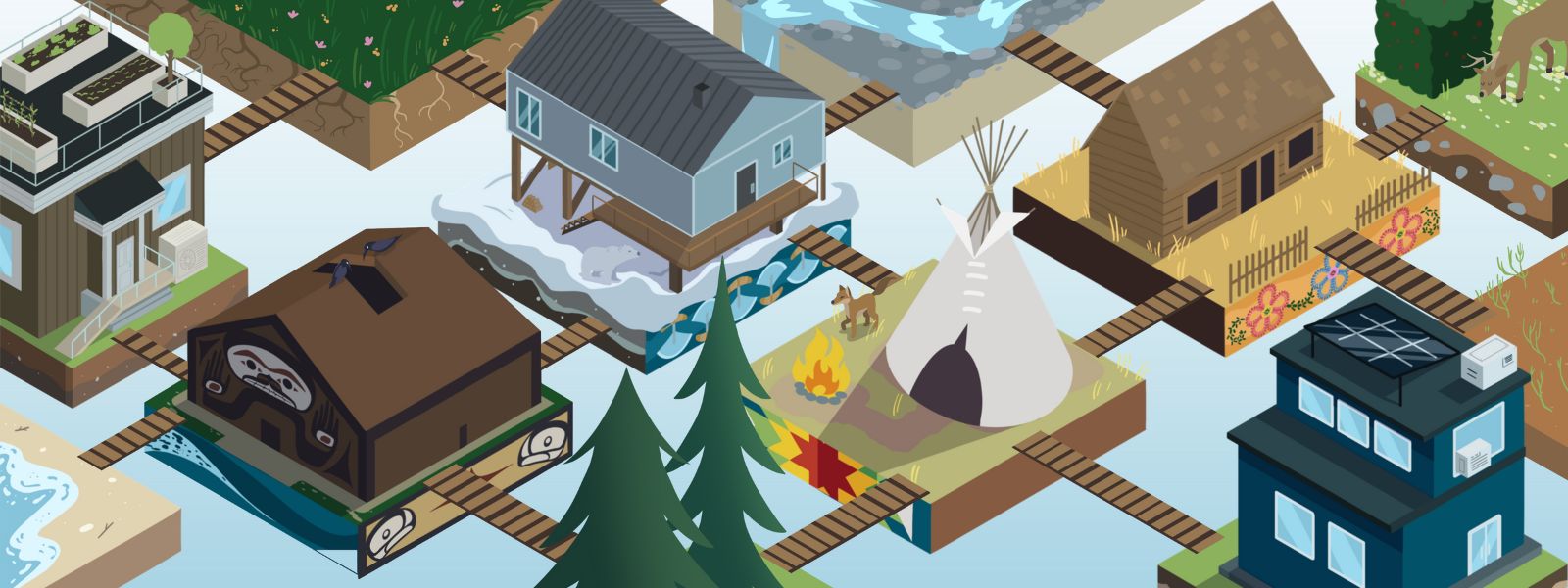
The report finds that closing the housing gap in First Nations, Inuit, and Métis communities requires smart, co-ordinated policy developed in partnership with Indigenous people. It proposes an innovative “Healthy Energy Homes” policy lens that can be applied to both new builds and deep retrofits in Indigenous communities. The Healthy Energy Homes approach offers actionable policy recommendations to address housing gaps, reduce energy bills and improve health and wellness, while uplifting Indigenous self-determination and advancing reconciliation.
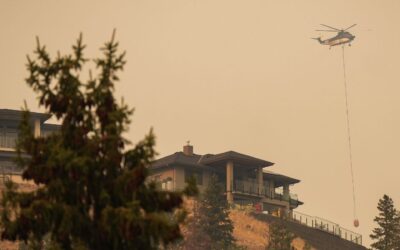
Currently, Indigenous people are almost three times more likely to live in housing that needs major repairs compared to non-Indigenous Canadians. The impacts of climate change such as extreme heat, wildfire smoke, erosion and flooding, exacerbating the divide and exposing Indigenous people to further health risks.
To address these underlying challenges in the context of climate change, the new report recommends federal, provincial and territorial governments act together and swiftly to deploy Healthy Energy Homes by: co-ordinating and integrating government action, co-developing policies and programs led by and for Indigenous leadership, committing to long-term investment agreements and flexible funding options, measuring the co-benefits of improved housing including well-being, and ensuring funding programs are accessible and responsive to the capacity needs of communities.
Together, these solutions point to a clear path forward. With the creation of the $13-billion Build Canada Homes agency, governments have a chance to meaningfully improve Indigenous housing, wellness, and climate resilience. While success also requires long-term, flexible funding, estimates suggest every dollar invested in Indigenous housing can provide a social return on investment of around $6.79, including an estimated $3.12 in government savings.
QUOTES
“A home is more than a shelter; it’s a gathering place that’s central to a family’s physical, emotional, spiritual, and cultural well-being. Many First Nations, Inuit, and Métis communities are already creating innovative building projects that are climate resilient, energy efficient and support people’s well-being. What’s needed is for all levels of government to remove barriers and co-develop housing policy led by and for Indigenous people.”
— Maria Shallard, Director of Indigenous Research, Canadian Climate Institute
“This report shows that improving Indigenous housing policy won’t just lead to better shelter, it will prevent hospital visits, save on energy bills, improve mental health, and support community resilience in the face of climate impacts. Put simply, governments will save money and lives if they adopt these policy changes swiftly.”
— Rick Smith, President, Canadian Climate Institute
“Indigenous Peoples and communities are at the forefront of stepping up to accelerate the energy transition in Canada. Yet housing deserves much more attention. Healthy homes are essential for improving health, tackling climate change, reducing energy costs, and enhancing overall community well-being. We hope this report drives policymakers and financial institutions to recognize the interconnectedness of Indigenous health, energy, and housing; and to encourage collaborative solutions that address the challenges communities face.”
— James Jenkins, Executive Director, Indigenous Clean Energy
“As the impacts of climate change intensify—and disproportionately impact Indigenous communities—climate resilience and energy-efficiency considerations can no longer be treated as ‘add-ons’ to housing. Closing the housing gap will require governments to support these approaches in new builds and retrofits, while also improving policy co-ordination with Indigenous Peoples.”
— Kayla Fayant, Energy Efficiency Projects Manager, Indigenous Clean Energy
“From Shelter to Strength affirms the Métis Nation’s belief that energy-efficient homes create healthy and safe environments that are essential to the well-being and self-determination of all Indigenous Peoples. By elevating community-led solutions, you are charting a path toward lasting wellness, resilience, and equity. The MNC strongly support the report’s recommendations and congratulates Indigenous Clean Energy, Canadian Climate Institute and the Indigenous Research team, and Shared Value Solutions on this excellent achievement.”
— Métis National Council (MNC)
“A healthy home provides the foundation for health and well-being, yet across Canada people do not have equal access to safe housing. This report is a critical tool for policy makers and an important addition to the body of research that demonstrates the links between housing, health, Indigenous rights and climate.”
— Geri Blinick, RentSafe Project Manager, Canadian Partnership for Children’s Health and Environment
“Across Canada, too many Indigenous children are growing up in homes, schools, and child care settings that undermine their health. This report provides the policy direction governments need to ensure Indigenous children have access to a safe, healthy, and climate-resilient home. It provides an invaluable roadmap to advance health equity and housing justice while honouring commitments to reconciliation and integrating Indigenous knowledge and leadership.”
— Erica Phipps, Executive Director, Canadian Partnership for Children’s Health and Environment
“This report reinforces the principle that housing is healthcare and advocates for holistic, culturally-grounded solutions. It reinforces AHMA’s mission to provide a ‘For Indigenous, by Indigenous’ approach to housing. The report provides evidence that long-term, flexible investments in energy-efficient, climate-resilient homes deliver health, social, and economic co-benefits. By framing housing as a determinant of health and linking it to climate resilience and self-determination, the report strengthens the case for policy reform and funding models that prioritize Indigenous voices, needs, and sovereignty.”
— Sara Fralin, Manager, Engagement and Technical Services, Aboriginal Housing Management Association (AHMA)
Resources
- Report | Building Shelter Through Strength: Policy prescriptions for Indigenous Healthy Energy Homes
- Scoping Paper | Beyond Sustainability: The Power of Indigenous Healthy Energy Homes
- Online Directory | Healthy Energy Homes Network Directory
Contacts
Claudine Brulé (Eastern Time)
Lead, Communications and External Affairs
Canadian Climate Institute
(226) 212-9883
Krystal Northey
Lead, Public Affairs
Canadian Climate Institute
(226) 212-9883
About the Canadian Climate Institute
The Canadian Climate Institute is Canada’s leading climate change policy research organization. The Institute’s Indigenous Research stream develops sound climate policy that is consistent with self-determination by centring Indigenous-led research. The team pursues this work through partnerships with Indigenous-led organizations, such as Indigenous Clean Energy, to amplify Indigenous expertise and knowledge.
About Indigenous Clean Energy
Indigenous Clean Energy (ICE) is an independent, non-profit organization that advances broad, sustainable prosperity by amplifying First Nation, Inuit, and Métis leadership in clean energy projects. Through high-quality, hands-on capacity building, career training, and mentorship, ICE supports Indigenous people in their clean energy journeys while promoting meaningful collaboration with energy companies, utilities, governments, development firms, clean tech innovators, the academic sector, and capital markets.