

Power Play
How to supercharge Canada’s clean electricity advantage
 Download the Report
Access to low-cost clean power can be a competitive advantage for Canada in the global race to attract investments in major industrial projects—but only if the country transforms how it plans and builds its electricity systems.
As electricity demand rises rapidly from projects such as mines, data centres, and manufacturing facilities, Canada increasingly risks turning away investment due to insufficient supply of clean power.
At the same time, the cost of clean electricity continues to fall dramatically. Wind, solar, and batteries are now among the fastest and cheapest power available. Yet Canada lags its international peers building clean electricity, which risks constraining national economic growth.
Our report, Power Play: How to supercharge Canada’s clean electricity advantage, examined how the country can unlock investments in clean electricity grids to power industrial growth. It focused on the four largest Canadian electricity systems, which represent over 75 per cent of Canadian industrial demand—Ontario, Quebec, Alberta, and B.C.—and compared them to leading jurisdictions around the world.
The report finds that current rules and incentives driving provincial electricity planning were designed for yesterday’s electricity technologies and are too cautious to build clean power at the pace and scale needed to meet rising industrial demand.
Canada also lacks the federal frameworks and funding needed to support interregional transmission lines that can increase grid flexibility and avoid wasting power from solar and wind facilities already in operation.
Low-cost, abundant electricity enables economic growth and electrification
Reliable, low-cost power has been a competitive advantage for Canada in the past thanks to the countryʼs substantial energy resources and investments in hydro and nuclear power.
But this advantage is not guaranteed—governments need to build out electricity grids with more clean power, and more flexibility and interconnection, to keep costs competitive for industrial projects looking to connect to the grid.
Our research shows that for the first time in decades, provinces are anticipating industrial demand to increase in the years ahead. Yet most are not planning to build enough new power supply or transmission to meet that demand, despite rapidly falling costs of renewables and battery storage.
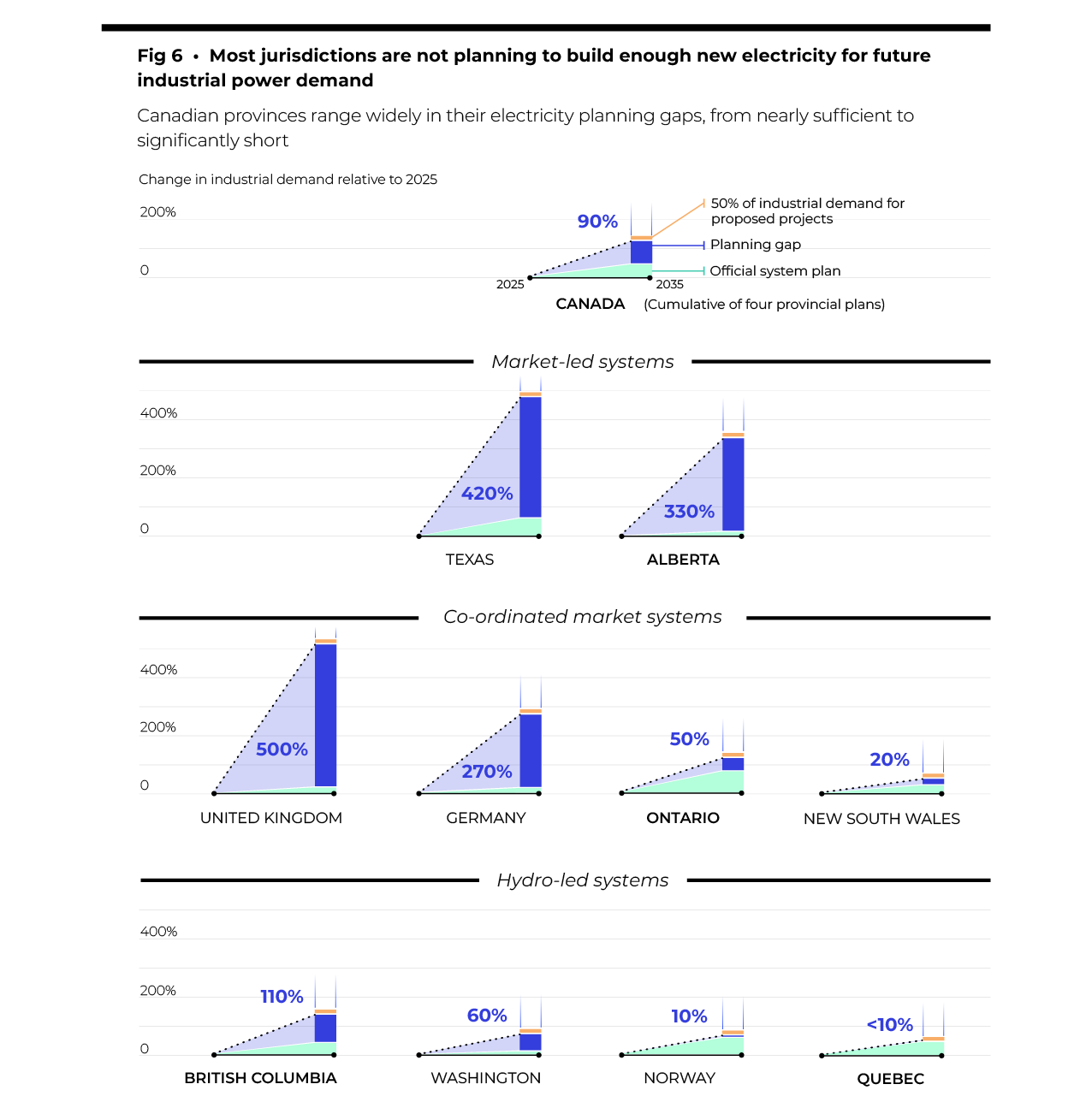
As demand continues to outpace supply, opportunity costs climb. Industrial investors will only deploy capital in Canada if they get timely access to power at competitive rates.
How expanding Canada’s electricity systems can attract investment
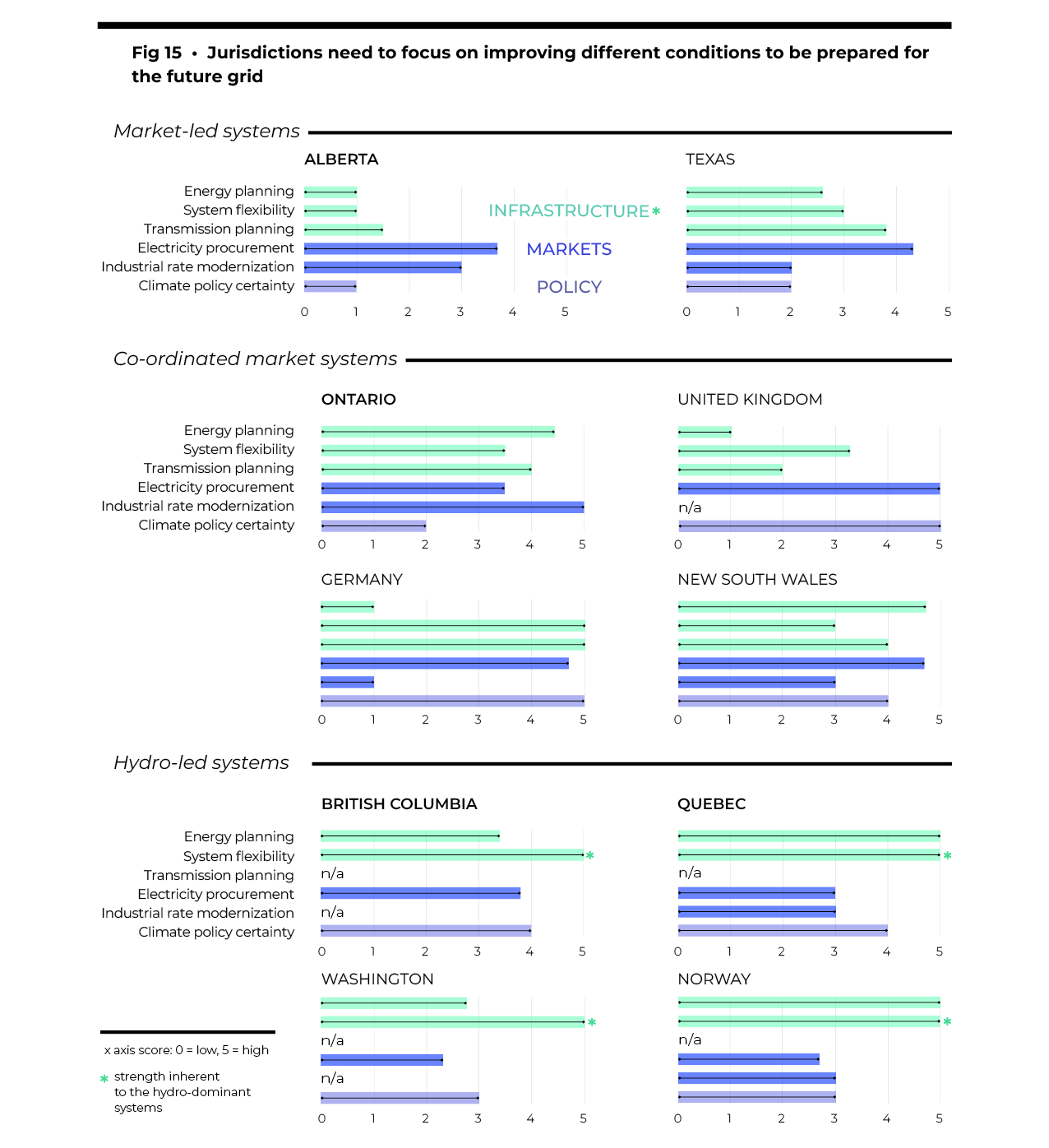
With Canada aiming to double its current grid capacity—as promised in the new national electricity strategy—the report identifies six areas where Canada’s governments must work together to create the conditions necessary to power industrial growth and ensure the cost of electricity remains competitive.
- Energy planning: Provinces need to plan to meet rising industrial demand, or risk falling short when it comes to electricity supply.
- Planning for flexibility: Flexible electricity grids—which can respond quickly to changes in supply and demand—keep rates competitive by using existing assets efficiently and reducing the need to expand the grid. For example, batteries and interties can help to meet peak demand alongside a limited role for existing gas-fired power.
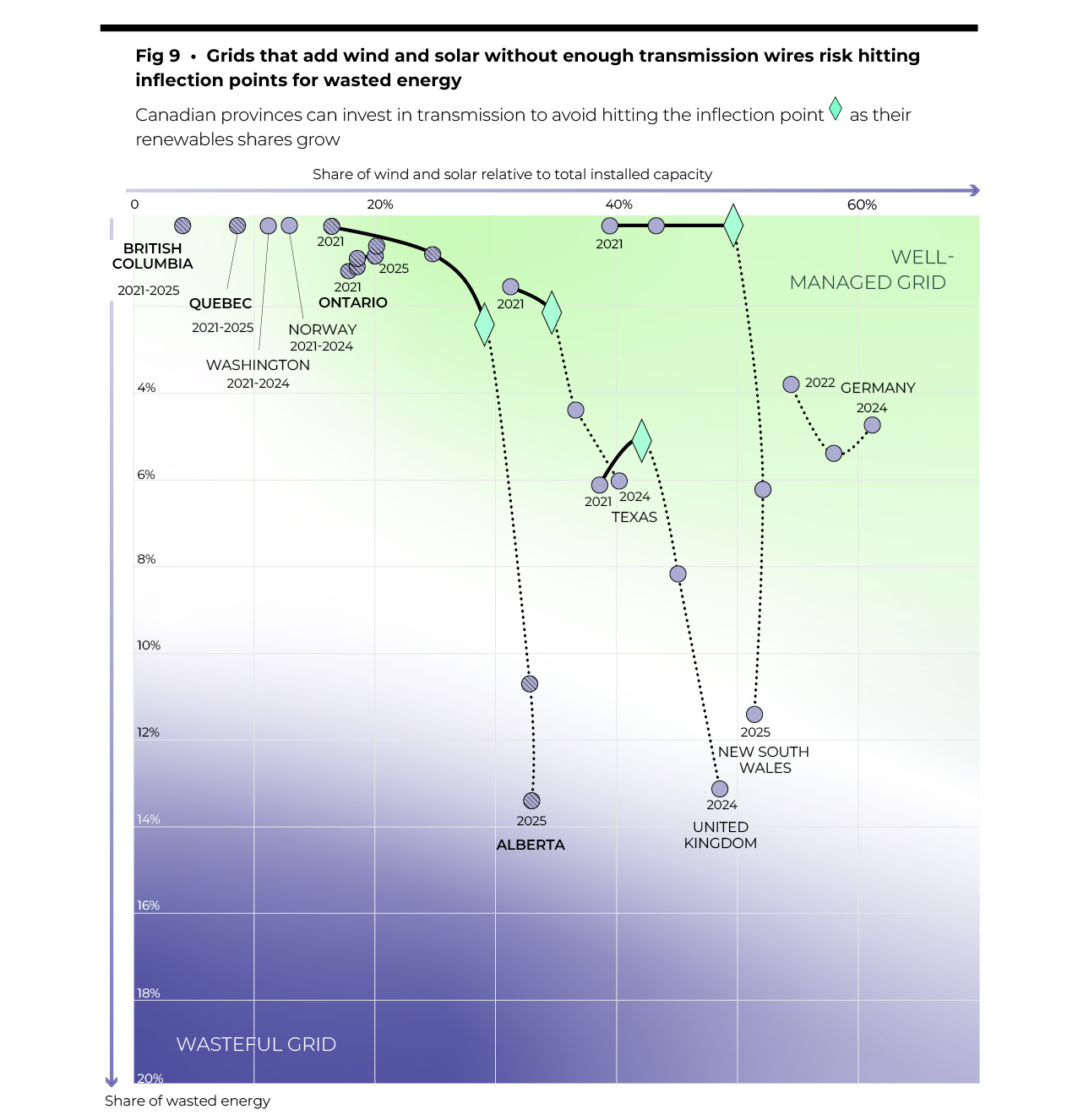
- Transmission planning: Transmission planning is increasingly important as more decentralized wind and solar is added to the grid. Without enough transmission, clean power has nowhere to go and is wasted.
- Electricity procurement: Provinces with attractive electricity markets offer investors frequent procurement opportunities or entry, large volumes, and contracts with high price certainty.
- Industrial rate modernization: Industrial investors want competitive electricity rates now and in the future. Provinces that incentivize industry to shift demand away from the grid’s highest-stress periods in a year can reduce pressure on rates.
- Policy certainty: Governments that provide climate policy certainty can spur investment in wind, solar, and battery projects. Decarbonization targets function as a North Star for investors, regulators, and system operators.
Building flexible electricity grids will keep costs low and attract investment
While leading economies around the world are reinventing their grids to harness the power of the clean energy transition, Canadian grids have generally been slower to adapt. Current electricity planning is often guided by obsolete assumptions of flat demand, outdated technology costs, and limited flexibility. Fortunately, some provinces have an advantage to work with—B.C. and Quebec’s hydro reservoirs make these some of the most flexible systems in North America, for example.
In today’s era of low-cost clean energy technologies, grid flexibility is the new competitive advantage. Not only does it help keep electricity rates cost-competitive, it frees up existing power supply and supports grid reliability. Grid operators can ensure their electricity systems are flexible by turning to different sources, including increased battery storage, demand response programs, and power imports through inter-provincial transmission lines or interties.
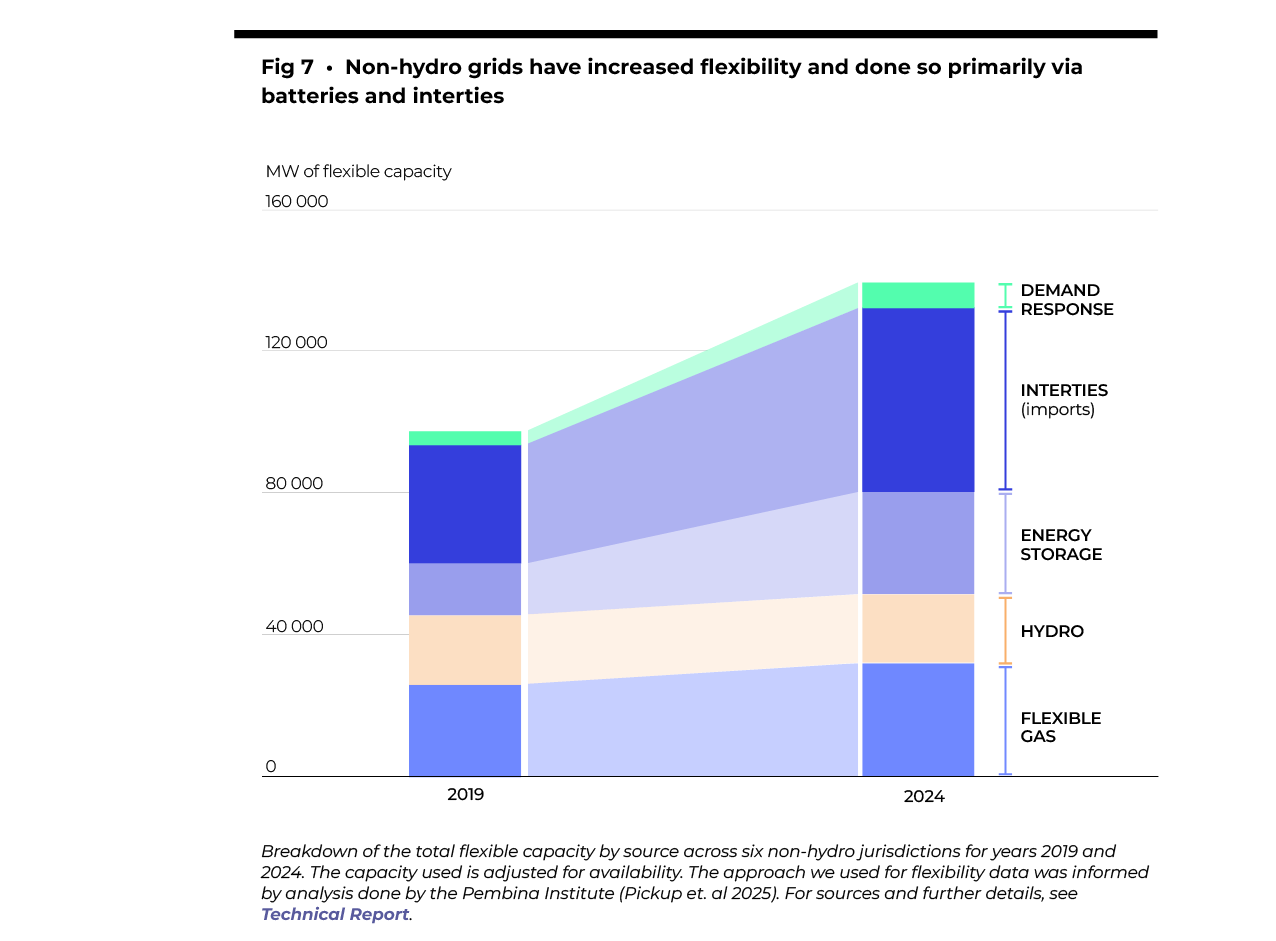
Low-emission sources of flexibility (such as batteries and interties to neighbouring grids) are already outpacing gas. In Texas, for example, batteries increasingly dominate peaking capacity while in Europe interconnections are stepping in.
Flexible grids also have the added benefit of reducing the amount of clean electricity that is wasted when it has nowhere to go due to lack of transmission or battery storage.
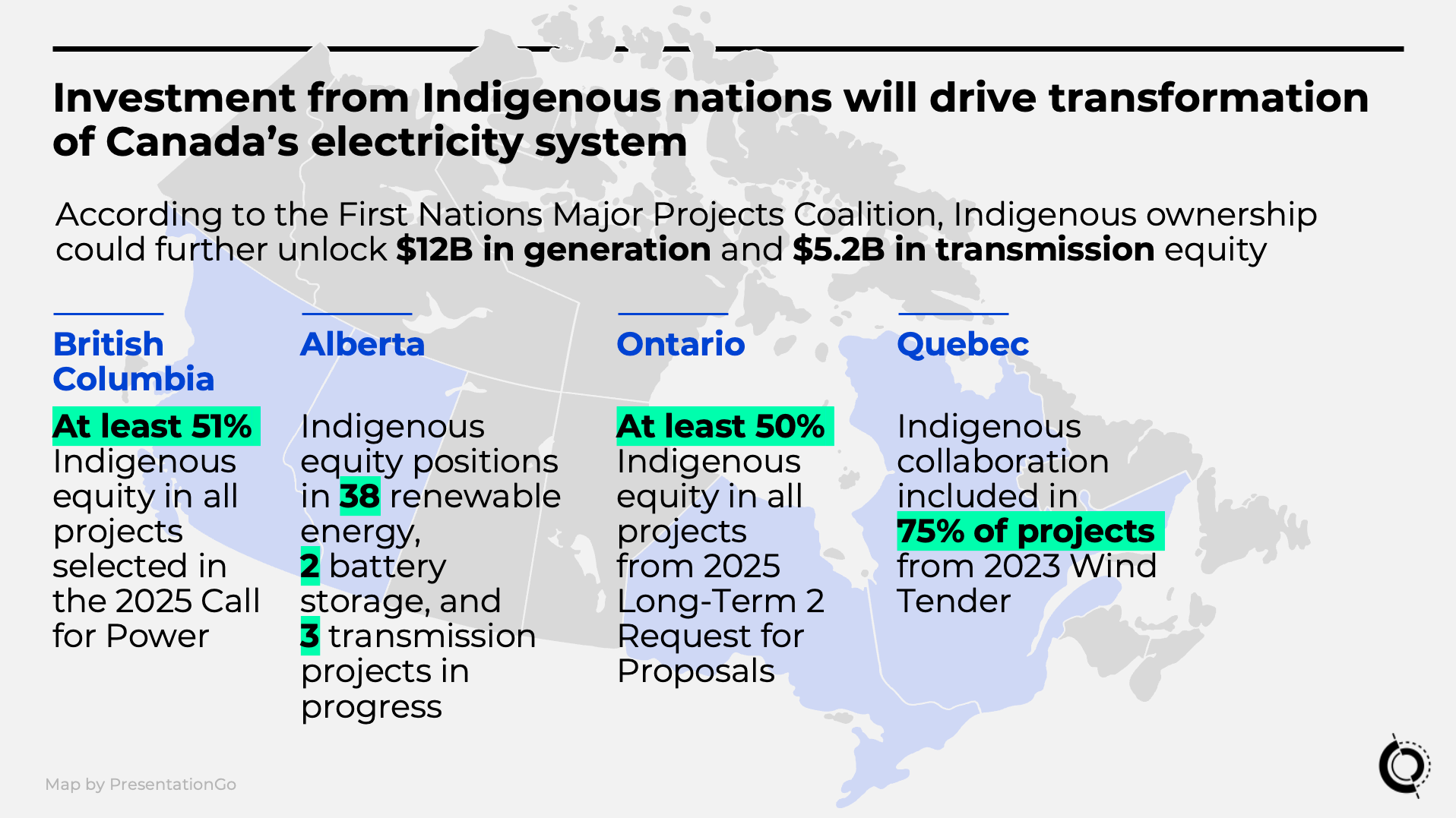
Indigenous peoples are central to expanding clean electricity and transmission
Indigenous governments are central actors in Canada’s electricity systems, given rights-based requirements for consent and increasing ownership of clean power and transmissions assets. Currently, Indigenous peoples are the largest electricity asset owners outside of Crown corporations and utilities, with equity in nearly 550 projects, roughly $260 billion in electricity infrastructure. According to First Nations Major Projects Coalition, Indigenous ownership could further unlock $12 billion in generation and $5 billion in transmission equity.
The federal government has a critical role to play to deliver national benefits
While electricity planning largely falls within provincial jurisdiction, the recommendations in this initial report focus on federal action, given the national economic implications in the race to attract investment, the need for interprovincial co-ordination, and the recent call for input on Canada’s national electricity strategy. Two additional reports focusing on provincial action will follow later this year.
Power Play points to four areas the federal government can take action on to help Canada gain competitive advantage in the race for global investment:
- The federal government should support new co-operative processes for interprovincial energy planning focused on information-sharing, goal-setting, and intergovernmental institutions.
- The federal government should selectively deploy the national balance sheet to support anticipatory grid build-out to realize nationwide benefits.
- The federal government should reduce climate policy risks for clean electricity investment across the country.
- The federal government should make system flexibility a strategic priority and use their investment tools to scale industrial demand flexibility.
Blogs and media statements
Canada’s new electricity strategy points in the right direction, but sidesteps critical issues
Clean electricity is transforming the global economy: it’s time for Canada to swim with the current
How Canada can build electricity transmission to unlock nation-building projects
Making Western grids work better together will mean more affordable, reliable, abundant electricity
Canada’s AI and electricity strategies can—and should—be mutually reinforcing
Grid-scale batteries improve reliability and cut costs, but Canada has been slow to respond
Indigenous-led electricity transmission projects: A generational opportunity
Carrying Power in a Good Way: Indigenous participation and leadership in electricity transmission is essential to Canada’s energy future
Utilities in Canada are getting much more low-cost, clean power than they asked for
STAY CONNECTED
Don’t miss the latest from the Canadian Climate Institute.
Sign up to receive future research from the Canadian Climate Institute, as well as timely policy analysis, blogs, and event invitations.
Support our work by donating to the Institute.