
Toronto—Ryan Ness, Director of Adaptation at the Canadian Climate Institute, made the following statement in response to the release of the federal government’s National Adaptation Strategy (NAS) progress report:
“Ottawa’s update on its National Adaptation Strategy documents a good deal of activity—but little sign that any of it is actually reducing the escalating climate and extreme weather risks that Canadians face.
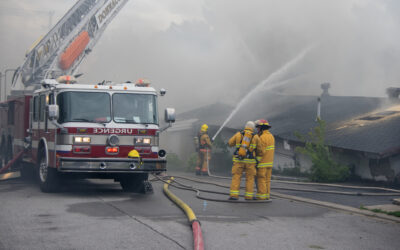
“This summer’s catastrophic wildfires that have destroyed communities, forced thousands to evacuate, and shrouded cities in toxic smoke are the latest signal that Canada must accelerate climate adaptation.
“The Progress Report highlights important forward movement, including a wide range of federal programs, tools, funding, and co-ordination efforts underway across the country. What’s missing is clear evidence that these initiatives are reducing climate risk in a meaningful way at a national level. By tracking programs rather than results, the progress report paints an overly-optimistic picture of success.
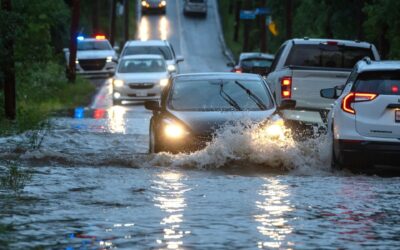
“On the government’s own evidence, the report shows that Canada is falling behind on climate adaptation on many fronts. Up to 1.5 million households still face flood risk so severe they are effectively uninsurable. Only a third of Canadians have taken steps to prepare for climate risks—short of the strategy’s 50 per cent target for 2025. Indigenous communities remain among the most exposed to climate-driven extreme weather risks, yet Ottawa has not lived up to the strategy’s commitments to support Indigenous-led climate adaptation action.
“Where the report does indicate progress, significant gaps still remain. Despite reporting that climate resilience is now factored into all federal infrastructure funding—a target it marks ‘100 per cent achieved’—those requirements are inconsistently applied and do not prevent funding being used for development in high risk areas. It points to growing use of climate data and services, but most Canadians still lack clear information about the climate risks they face. And its commitment to co-ordinate adaptation bilaterally with every province and territory has only resulted in discussions with a handful of jurisdictions thus far.
“The National Adaptation Strategy may be an important foundation—but on its own it has not driven the progress Canadians need. As the Climate Institute’s original assessment of the National Adaptation Strategy urged, what’s required now is a focused set of concrete measures, targeted at the highest climate risks and backed by investment, clear timelines, and accountability to deliver real reduction in risk. Anything less continues to leave Canadians exposed to a climate threat that is growing much faster than our defences.
RESOURCES
- Report | Toward a Safer and More Resilient Canada
- Report | Prepare or Repair: How climate-proofing public infrastructure pays off
- Report | Close to Home: How to build more housing in a changing climate
- Op-ed | Canada can’t afford to fall behind in climate-proofing infrastructure
- Op-ed | Canada wants to diversify trade but needs infrastructure built for climate change
- Op-ed | How Ottawa can protect Canadians from extreme weather while saving billions
CONTACT
Claudine Brulé (Eastern Time)
Lead, Communications and External Affairs
Canadian Climate Institute
(226) 212-9883
Krystal Northey (Mountain Time)
Lead, Public Affairs
Canadian Climate Institute
226 212 9883
About the Canadian Climate Institute
The Canadian Climate Institute is Canada’s leading climate change policy research organization. The Institute produces rigorous analysis, economic modelling, and in-depth research focused on incentivizing clean economic growth and low-carbon competitiveness, reducing emissions and accelerating Canada’s net zero energy transition, and making our economy and infrastructure more resilient to a warming climate.